

Iran’s paramilitary Revolutionary Guard launched missile and drone strikes on Bahrain and Kuwait on Sunday in retaliation for US airstrikes targeting the Islamic Republic. The Guard also warned that any further US attacks could bring negotiations aimed at ending the conflict to a “complete halt.”
The latest escalation comes amid growing tensions over access to the Strait of Hormuz. A US Navy-backed multinational maritime body announced on Saturday that it would expand a shipping corridor near Oman to facilitate two-way traffic, prompting a sharp response from Tehran.
Iran maintains that it should have sole authority over the strategically vital waterway after the war. While the strait lies within the territorial waters of Iran and Oman, much of the international community regards it as an international shipping route. In recent days, Iran has twice targeted vessels using a UN-supported route on the Omani side instead of the passage approved by Tehran.
The Iranian strikes targeted Gulf nations hosting US military facilities. Kuwait said its air defense systems intercepted two incoming ballistic missiles and several drones shortly after the American strikes, adding that no casualties or damage were reported. The country hosts a major U.S. Army base.
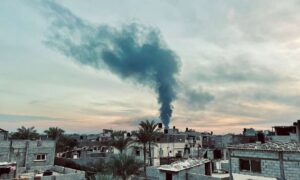
In Bahrain, authorities said an Iranian strike hit a residential building near the international airport, destroying its top floor. No deaths were reported. Bahrain, home to the U.S. Navy’s Fifth Fleet, said the damaged building was not located near the fleet’s headquarters in Manama.
Bahrain condemned the attack, calling it a dangerous escalation and accusing Iran of pursuing a deliberate pattern of repeated aggression against the kingdom’s sovereignty and the safety of its residents.
The exchange followed a weekend of military action between Washington and Tehran. U.S. Central Command said it struck Iranian surveillance systems, communications infrastructure, air defense positions, drone storage sites and minelaying capabilities after Iran attacked the Panamanian-flagged oil tanker Kiku, which was transporting Qatari crude.
U.S. President Donald Trump said the strikes targeted Iranian missile and drone storage facilities as well as coastal radar installations, accusing Tehran of violating the ceasefire agreement. He warned that continued violations could force the U.S. to escalate its military response.
The latest incident followed another exchange days earlier, when an Iranian drone struck a merchant vessel off the coast of Oman, prompting U.S. retaliatory strikes.
The Revolutionary Guard claimed responsibility for the attacks, saying it had targeted Al Asad Air Base in Kuwait. It warned that any breach of the ceasefire would halt ongoing diplomatic efforts.
The U.S. military said Iran had been given an opportunity to uphold the ceasefire but chose instead to attack the Kiku.
According to ship-tracking data, the tanker had departed a Qatari oil field and was headed to a port in the United Arab Emirates via a shipping route off Oman’s coast, an alternative corridor established outside the Iranian-approved passage through the Strait of Hormuz.