

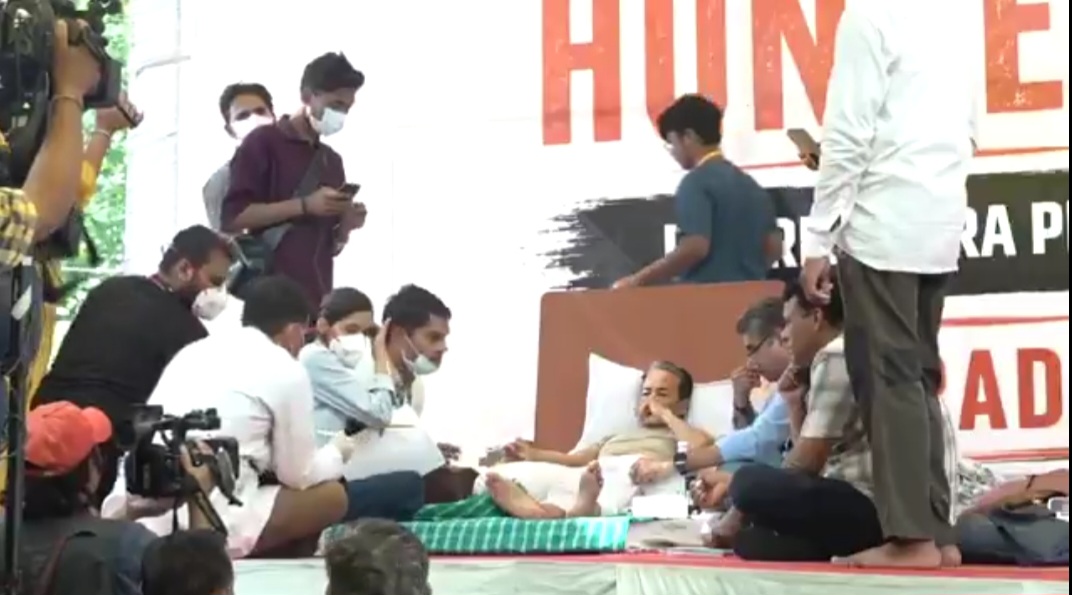

New Delhi: Activist Sonam Wangchuk has lost over 9 kg after completing 19 days of his indefinite hunger strike at Delhi’s Jantar Mantar, according to his doctors, who said he remains medically stable but warned that the coming days could be critical.
Dr Satish Lamba, who is monitoring Wangchuk’s health, said his blood sugar, pulse and blood pressure remain within acceptable limits, while hydration is satisfactory and he is mentally alert. However, rising uric acid levels and the presence of ketones in his urine indicate that his body has shifted to burning fat and muscle for energy, raising concerns over potential complications if the fast continues.
Wangchuk has refused to end his hunger strike despite repeated appeals from political leaders, supporters and legal interventions. He said calling off the protest without any response from the Centre would defeat its purpose and send a message that accountability is unnecessary.
In a video message, Wangchuk acknowledged growing concerns about his health but said medical tests, including an ECG, were largely normal for someone fasting for 18 days. He admitted feeling weak but said his heart and other vital functions remained stable.
Instead of urging him to end the fast, Wangchuk appealed to supporters to participate in the Cockroach Janata Party’s proposed “Chalo Sansad” march to Parliament on July 20, coinciding with the start of the Monsoon Session. He also encouraged educational institutions to treat the march as an experiential learning exercise under the National Education Policy.
The protest, led by the Cockroach Janata Party (CJP), is demanding the resignation of Union Education Minister Dharmendra Pradhan over alleged irregularities, question paper leaks and student suicides linked to national examinations, including NEET.
Meanwhile, a public interest litigation filed in the Delhi High Court has sought Wangchuk’s immediate hospitalisation and force-feeding, citing concerns that his life could be at risk.
Doctors, however, said any medical intervention would require his consent and that intravenous fluids would be safer than tube feeding if treatment becomes necessary.