

The future does not arrive overnight. It begins with one curious student, one bold idea, and one society willing to dream beyond today’s limitations.
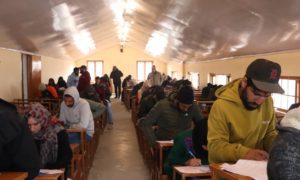
Maybe the next global breakthrough in quantum science will come from a student who is today sitting quietly in a classroom in Srinagar, Baramulla, Anantnag, Kupwara, Pulwama, or Bandipora- someone whose name the world does not yet know
Perhaps one day, instead of asking whether Kashmir can participate in the quantum revolution, the world may ask what contributions Kashmir has made to it.
Every generation has a technology that changes the course of history. For our grandparents, it was electricity. For our parents, it was the internet. For our generation, it may well be quantum computing. The question is: will Kashmir help shape this future, or simply watch it unfold from a distance?
For decades, conversations about Kashmir have revolved around politics, tourism, conflict, unemployment, and development. These are important discussions, but perhaps they have also overshadowed another story- one that deserves equal attention: the extraordinary potential of Kashmir’s young minds.
Across the Valley, thousands of students spend sleepless nights preparing for competitive examinations, learning programming, studying physics, engineering, mathematics, and artificial intelligence. They dream of contributing to something larger than themselves. Yet many eventually leave Kashmir in search of opportunities that they cannot find at home.
What if the next opportunity did not lie in another city alone, but in preparing ourselves for one of the most transformative technologies of the twenty-first century?
That technology is Quantum Computing.
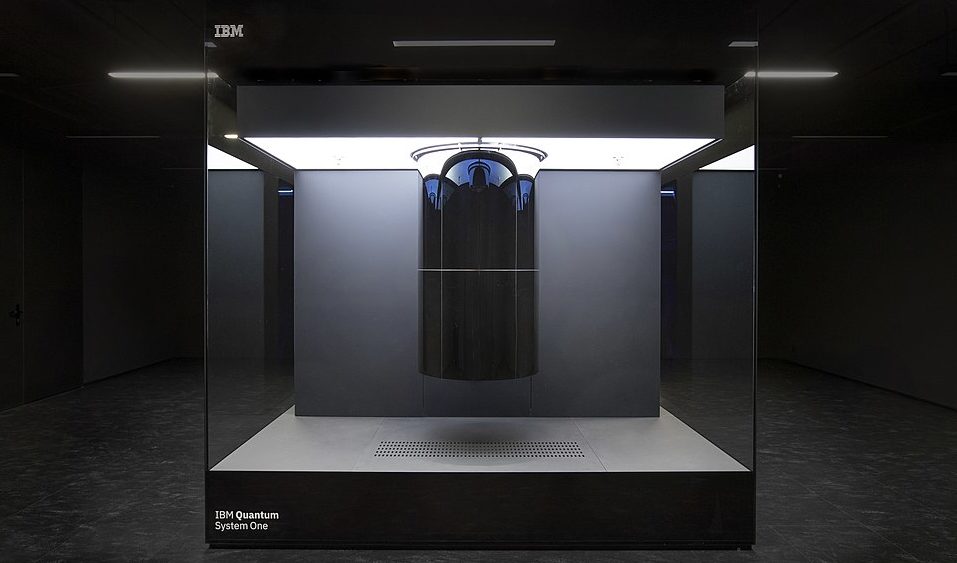
Unlike conventional computers, which process information using bits that are either 0 or 1, quantum computers exploit the strange principles of quantum mechanics to solve certain classes of problems in entirely new ways.
Although still in its early stages, the technology is already attracting unprecedented investment from governments, universities, and technology companies across the world.
From designing new medicines and improving artificial intelligence to strengthening cybersecurity and advancing scientific research, quantum technologies are expected to redefine the boundaries of innovation.
India has recognised this shift through the National Quantum Mission, signalling that quantum technology is not merely an academic pursuit but a strategic national priority. While discussions about this mission often focus on laboratories, research institutions, and large cities, another question quietly waits to be asked.
Where does Kashmir fit into this national journey? Perhaps the answer is simpler than we imagine. Not in machines. Not in billion-dollar laboratories. But in people.
Kashmir has never suffered from a shortage of intelligence. It has suffered from a shortage of opportunities that allow talent to flourish without leaving home. Every year, bright students from the Valley qualify for prestigious universities and research institutions across India and abroad. Their achievements prove something important: the capability already exists.
Imagine if even a fraction of these young minds were encouraged to enter emerging fields such as quantum computing, quantum communication, quantum sensing, and quantum cybersecurity.
Imagine universities introducing specialised courses, research groups collaborating with national institutions, local innovation hubs supporting deep-tech startups, and students from villages seeing quantum science not as an impossible dream but as a realistic career path.
This is not a fantasy. It is precisely how technological ecosystems begin.
Bengaluru did not become India’s technology capital overnight. Hyderabad did not become a pharmaceutical hub in a single decade. Such transformations started with investment in education, research, and human capital long before industries arrived.
Kashmir can learn from this lesson.
The Valley does not need to manufacture quantum computers tomorrow. It needs to prepare the minds that may design the algorithms, develop the software, build the sensors, secure the communications, and lead the research of tomorrow.
The greatest strength of quantum computing is not simply its computational power. It reminds us that the most revolutionary discoveries often emerge from curiosity about the invisible. Long before quantum mechanics transformed modern technology, it existed only as abstract mathematics and difficult questions that many considered impractical.
Today, those same ideas underpin lasers, MRI scanners, semiconductor electronics, GPS corrections, and countless technologies we use every day.
History teaches us an important lesson. Every revolutionary technology first appears impossible. Then unnecessary. Then inevitable. Perhaps Quantum Computing is following that very path.
For Kashmir, the conversation should not be about whether quantum computers will be built in the Valley next year. The conversation should be about whether our schools, colleges, universities, policymakers, and industries are preparing today’s students for the opportunities that may define the coming decades.
The future will not ask whether we had beautiful mountains.
It will ask whether we transformed the brilliance of our young people into knowledge, innovation, and leadership. What if the next revolution wasn’t in the mountains or the markets-but in the invisible world of quantum physics?
Quantum computing is no longer a concept confined to science fiction. Nations across the world are investing billions of dollars in this transformative technology because it has the potential to solve problems that today’s most powerful computers cannot. Kashmir has always produced talented students, researchers, engineers, and innovators.
What many of them lack is not potential, but exposure and opportunity. As universities introduce courses in quantum science and industries begin looking for skilled professionals, our students can become part of this growing ecosystem.
A student sitting in Srinagar today could one day contribute to quantum algorithms, quantum software, quantum communication, or quantum sensing while collaborating with teams across the world.
This is not merely about creating another engineering job. It is about creating an entirely new generation of scientists, entrepreneurs, educators, and innovators.
Quantum computing is also a reminder that science has the power to unite people. Research knows no borders of language, region, or background. It values curiosity, patience, and imagination. These qualities have always existed among the youth of Kashmir.
Of course, building a quantum future will not happen overnight. It requires investment in education, stronger collaborations between universities and research institutions, workshops, internships, and public awareness. The first step is not buying a quantum computer-it is inspiring a young mind to ask questions and believe that they belong in this field.
Every major technological revolution has rewarded those who prepared before the opportunity arrived. Artificial intelligence, semiconductors, and space technology all seemed distant dreams until nations invested in them. Quantum technology is following the same path.
The future belongs to those who prepare for it today. For the youth of Kashmir, quantum computing is not just about understanding the strange laws of physics. It is about imagining a future where knowledge creates opportunity, innovation creates employment, and curiosity becomes the foundation of progress.
The quantum age has already begun.
The real question is not whether Kashmir is ready for it.
The question is whether we are ready to prepare Kashmir for it.