

Inside a cup of Koshur Kahwe, heat moves, molecules dance and entropy quietly takes its course
In Kashmir, some things don’t need an introduction.
Snow on the mountains, the first chill of winter, the warmth of a Kaangir, and the familiar sound of someone asking, almost automatically, “Kahwe chakha?”
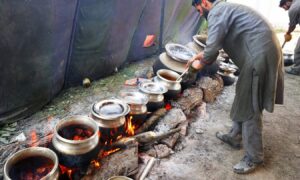
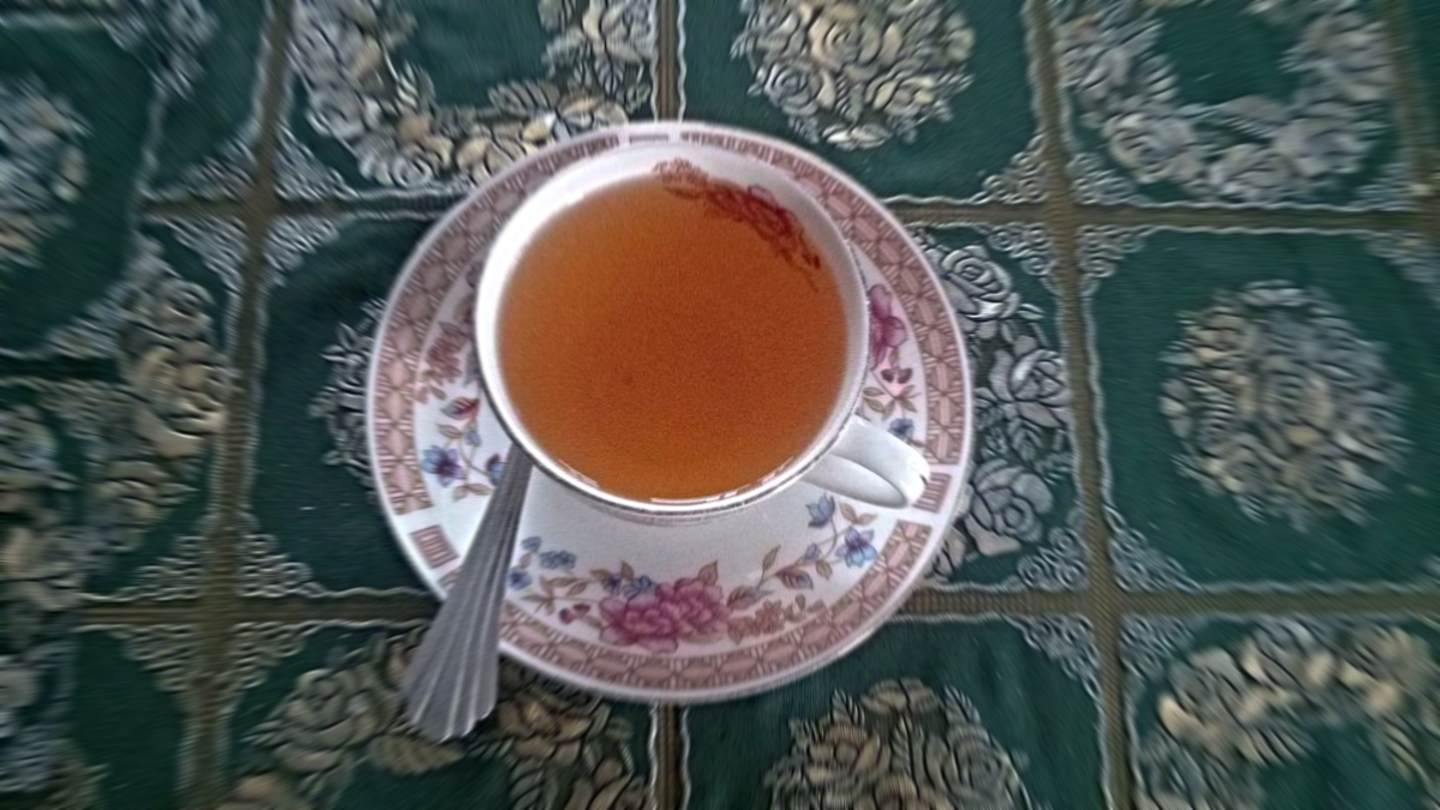
A cup of Kashmiri Kahwe can be one of the easiest things to make. Boiling water, green tea, saffron, cardamom, maybe cinnamon, almonds and a touch of sugar.
It is made, poured into a cup, and allowed to do what it has done for generations: warm the hands and the room around it.
But something else is happening inside that cup. Physics operates without making an announcement.
The moment you pour hot water into a cup, one of the most familiar laws of nature begins to play out.
Heat begins to move away from the hotter Kahwe and toward the colder surroundings.
The cup warms. The air above it heats up. The surface starts to cool.
Even the hands that hold the cup are part of this exchange. Heat is often referred to as something that “leaves” a hot object, but heat is better described as energy being transferred due to a temperature difference.
Nature does not like to maintain temperature differences forever.
Left alone, a hot cup will eventually reach the same temperature as its surroundings.
That is why a cup of kahwa so hot that it is almost too hot to drink will eventually become comfortable, and then, if forgotten long enough, disappointingly cold.
The initial phase of this cooling is performed by the cup. The hot liquid transfers energy to the walls of the cup.
The cup transfers some of that energy to the surrounding air and to our hands when we hold it.
This is conduction: energy being passed through matter because its particles are interacting with each other.
But conduction is only part of it. Look at a fresh cup of Kahwe and you might see the air over it wavering.
Warm air rises because heating makes the air less dense. Cooler air takes its place, creating currents that carry heat away from the cup.
This movement of fluid caused by temperature differences is called convection.
But the same basic physics works much larger in nature.
One small, everyday example of the movements that take place in the atmosphere, in oceans and inside the Earth is the warm air that rises above a cup.
Then there is the barely visible part. A hot cup gives off energy to its surroundings. Every object above absolute zero in temperature emits electromagnetic radiation.
Most of this radiation we cannot see because it is outside the range of what our eyes can see, but it is real.
This radiation transfer of energy is part of the reason why we feel warmth from many hot objects.
So, when we sip a cup of Kahwe on a cold Kashmiri morning, we are not merely sipping a warm beverage. We are sitting in the middle of a small thermodynamic experiment.
Then evaporation occurs. Some molecules at the surface of the Kahwe have enough energy to break free from the liquid and enter the air.
The quicker, more energetic molecules are more likely to escape. As they escape, they take energy with them and this helps in the cooling of the liquid left.
This is why the steam that rises from a hot cup isn’t just something beautiful to watch on a winter morning.
It is a clear sign that the liquid is exchanging energy and matter with its environment.
Even the ingredients are a bit of a story about physics. The molecules of the saffron and cardamom spread their characteristic aromas through the air around them.
They move from greater to lesser concentrations. This process, called diffusion, is taking place all around us all the time, but we seldom pause to notice it.
The smell of Kahwe reaching a person sitting across the room is thus not just a matter of “smell travelling.”
On a microscopic level, molecules move randomly through the air until some of them reach our noses.
The almonds floating in the cup are another little lesson. The density and the forces between the almond, the liquid and the surrounding air keep it near the surface.
The same broad physical principles that explain why some things float and others sink dictate the behaviour of things in a fluid.
None of this devalues the cultural significance of the Kahwe cup. If anything, it makes it more noteworthy.
For centuries, people have prepared and enjoyed Kahwa, with no knowledge of the language of thermodynamics.
They knew without equations that a hot drink warms cold hands, that steam rises, that a forgotten cup will eventually go cold.
Science began long before we named these processes.
The processes were there already. What science did was give us a way to ask why.
Perhaps that is one of physics’ most beautiful things. It is not confined to laboratories, particle accelerators or pages of equations.
It is in the things we have been doing for generations without naming them physics.
It is when snow melts on a roof. It exists when sunlight comes through a window. It exists when a mountain is lost in mist. And it exists in a cup of Kahwe.
There is a deeper idea hidden inside that cooling cup.
The Kahwe is much hotter than the air around it at the start.
As time goes on, the difference shrinks. Energy escapes into the environment until the temperature difference is slowly wiped out.
In thermodynamics, this tendency toward equilibrium is linked to one of the most profound ideas in physics: Entropy.
In textbooks, entropy is often presented as a difficult concept with equations. But perhaps it can be understood more tenderly through something as ordinary as a cup of tea.
A hot cup sitting on a table does not get hotter by itself, and simultaneously cool the room.
The process naturally moves in the other direction: energy spreads from the hotter system to the cooler surroundings.
The direction is important. It’s one small example of something physicists call the arrow of time, the observation that many physical processes have a preferred direction.
We remember the Kahwe wa being poured out hot.
Normally, we don’t see a cold cup getting hot just by taking energy from the room.
The cup is thus doing something surprisingly profound. It is reminding us that time, heat and disorder are interconnected.
But perhaps the most interesting part is not what happens to the Kahwe.
It is what happens to us while we wait for it to cool. Kahwe is often drunk at leisure in a cup. It opens the discussion. Someone sits next to you. The story begins. Another person comes in. The cup goes round and no one appears in a hurry for a few minutes.
Physics tells us how the cup loses its heat. Culture tells us why we make another one.
And somewhere in between lies the why the humble cup of Kahwe feels like so much more than a drink.
The next time you hold one in your palms on a cold Kashmiri morning, you may sense the warmth a little differently.
You may be thinking about conduction through the cup, convection in the air, radiation from the hot liquid, evaporation from its surface, and the microscopic dance of molecules carrying its aroma across the room.
Or you might just take a sip. Both are perfectly rational responses. Because sometimes physics does not have to complicate an ordinary moment.
Sometimes it just gives us another reason to look at an ordinary moment and realise how extraordinary it already was.