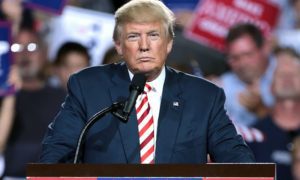

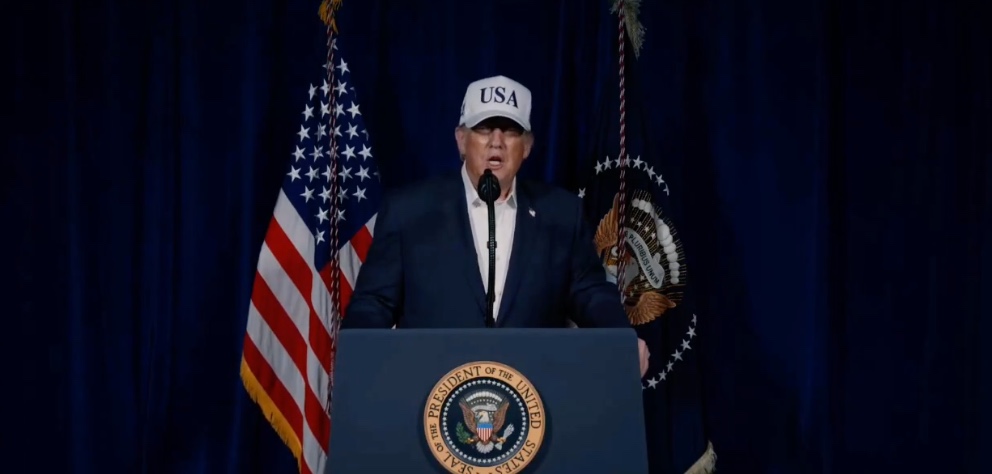
In a video statement released after the United States and Israel began airstrikes on Iran, Trump said the campaign aimed to dismantle Iran’s military capacity and remove the leadership that has ruled since the 1979 revolution.
Speaking from his residence in Florida in a video posted on his Truth Social platform, he said the strikes would target Iran’s missile infrastructure and naval forces, vowing they would be “completely destroyed.” He also called on critics of Tehran’s leadership to rise up, telling them that their “hour of freedom” had arrived and urging them to take control once the operation concluded, describing it as a rare opportunity.
“We are going to destroy their missiles and raze their missile industry to the ground. It will be totally — again — obliterated. We’re going to annihilate their navy,” Trump said in the address from his Florida home posted to his Truth Social platform.
Addressing Americans, however, he cautioned that U.S. personnel could be killed during the mission, which the Pentagon named “Operation Epic Fury.” He acknowledged the possibility of casualties, a politically sensitive issue given his decision not to seek congressional authorisation and his past opposition to foreign military interventions.
Earlier limited operations, including a January raid in Venezuela and airstrikes on Iranian nuclear facilities last June, were carried out without US fatalities. Officials say the current campaign is far broader in both military scope and political consequences.
The offensive had been anticipated after a major U.S. troop buildup in the Middle East, though lawmakers questioned why Trump had not formally explained the rationale to Congress or the public. The video message appeared unexpectedly online early in the morning while he was staying at his golf club.
He defended the action as necessary to protect Americans by neutralising what he described as imminent threats from Tehran, alleging that Iran was attempting to revive its nuclear efforts and expand long-range missile capabilities that could endanger US allies, overseas troops and potentially the US mainland.
Trump also called on Iranian security forces to surrender, promising immunity if they laid down their arms, while warning civilians to remain indoors because of the scale of the bombardment.
Just a day earlier, he had said no final decision on military action had been made, and US envoys were still in talks with Iranian officials over nuclear concerns. Mediation efforts led by Oman had expressed optimism about a compromise following discussions in Geneva. Oman’s foreign minister later met US Vice President JD Vance and told CBS News that Iran had agreed to avoid stockpiling highly enriched uranium—an assertion Tehran has denied.