

Every rupee placed in a donation box is a vote for the kind of society we want to be.
For generations, places of worship have been natural collection points for charity. They offer spiritual comfort, a ready audience, and a moral framing for giving. But when everyday generosity encounters urgent public needs — overcrowded hospital wards, children without basic learning materials, and chronic shortfalls in medical research — it is time to reconsider where we place visible donation points.
If we want small acts of kindness to produce the greatest possible public good, we should prioritise hospitals and schools as primary locations for donation boxes.
Donation boxes should be in hospitals and schools as much as in places of worship, because healing the sick and educating the poor are among the greatest forms of serving Allah’s creation.
The Qur’an says:
“…And whoever saves one life—it is as if he had saved all mankind.”
This verse reminds us that contributing towards medical treatment, life-saving equipment, medicines, or healthcare facilities is among the noblest acts of charity.
The Messenger of Allah ﷺ said:
“The most beloved people to Allah are those who are most beneficial to people.”
Supporting a patient’s treatment or enabling a child’s education are among the clearest examples of being beneficial to others.
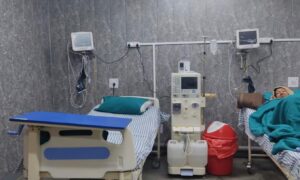
The practical case is simple and urgent. Hospitals are where time and money literally save lives. Many government hospitals and charitable clinics operate on razor-thin budgets, relying on ad hoc philanthropy to buy medicines, maintain essential equipment, and support families who cannot afford travel and accommodation during long treatments. Even modest, regular donations can cover consumables for neonatal units, fund emergency blood transfusions, or provide transport grants that keep families from abandoning care.
Schools, similarly, are investment centres for the future. Funds collected there can repair toilets, supply textbooks, run remedial classes for struggling students, and support inclusive education for children with special needs. These are interventions with measurable returns—improved survival, higher attendance, better learning outcomes—that transform individual lives and reduce long-term social costs.
Visibility and connection increase giving. Donors give more when they see the link between their contribution and an identifiable result. A donation box in a hospital entrance, accompanied by a monthly poster reading, “This month’s funds paid for 20 dialysis sessions,” or a photograph of a child whose surgery was funded, makes the impact immediate and persuasive.
Schools can do the same by showing exactly how funds were spent: new textbooks, a repaired boundary wall, or a remedial teacher employed for a term. Religious institutions can and do publicise their own work, but the emotional immediacy in hospitals and schools—where donors witness need firsthand—is often stronger. That immediacy builds trust, which then encourages more consistent giving.
There is also an inclusivity argument. Public institutions belong to everyone. Religious spaces are central to many people, but they also naturally associate giving with faith. For those who are non-religious, belong to minority faiths, or simply feel uncomfortable donating in a sacred space they do not share, that association can become a barrier.
Locating donation infrastructure in hospitals and schools reframes charity as a civic responsibility rather than only a religious act. It fosters a sense of shared belonging—that healthcare and education are collective responsibilities, regardless of religion. In diverse societies, such neutrality can strengthen social cohesion more effectively than appeals rooted in a single tradition.
Design and modernisation can further amplify small acts of kindness. Thoughtful placement—at outpatient departments, blood donation centres, and parent-teacher meeting areas—captures moments when empathy is highest. People are already engaged with health or education issues there, whether as patients, relatives, or parents.
Adding digital payment options, such as QR codes, UPI, and SMS giving, ensures that people who do not carry cash can still contribute, widening the donor base. Clear receipts and public impact reports reassure contributors that their money reaches the intended cause. Over time, such systems can transform one-time donations into sustained micro-philanthropy.
Concerns about governance are real but solvable. Critics worry that shifting donation efforts towards public institutions could invite mismanagement or bureaucratic delays. The solution is not to avoid public fundraising but to insist on transparent and accountable systems.
Hospitals and schools hosting donation boxes should publish audited statements, maintain separate funds for designated purposes, and include independent community representatives on oversight committees. Local governments can establish simple standards for collecting, recording, and reporting donations while training staff in ethical fundraising. Monthly audits, visible expenditure boards, and external oversight can protect donors and ensure funds reach patients and students.
Religious institutions should not be sidelined. Many temples, mosques, churches, and gurdwaras already run exemplary charitable programmes, including free kitchens, clinics, scholarships, and disaster relief. The proposal is not to remove donation boxes from places of worship but to expand donation points so that community generosity also reaches hospitals and schools, where public needs are immediate and easily verifiable.
Partnerships between religious organisations and public institutions can also be effective. A mosque, temple, church, or gurdwara could dedicate a portion of its collections to a nearby government hospital or support a school meal programme. Such collaborations respect religious giving while directing part of that generosity towards strengthening public services.
There are practical precedents. Several public hospitals and charitable trusts already maintain donation counters and appeal boxes with encouraging results. Small towns with active parent-teacher associations demonstrate how locally raised funds directly improve learning conditions. Internationally, initiatives such as hospital charitable funds and “adopt a ward” programmes show that community donations can be managed transparently and used for urgent healthcare needs. These examples prove the idea is practical, not merely theoretical.
The strategy also supports research and long-term care. Donations raised in hospitals can support institutional research, subsidise clinical trials for diseases affecting poorer communities, and improve data collection for better policymaking. Schools can use donated funds to identify learning gaps and test remedial programmes that can later be replicated elsewhere. In this way, donations not only address immediate needs but also improve future public services.
Finally, the symbolic value matters. Placing donation boxes where vulnerable people receive care and education—in hospital wards and classrooms—signals that society values life and learning alongside faith. It reframes compassion as action with measurable outcomes. It teaches children that civic responsibility is as important as spiritual practice and assures donors that even small contributions can create meaningful change.
A modest change in civic design can produce significant results. Imagine every district hospital with a clearly marked donation point, monthly impact reports, and a QR code for instant giving. Imagine every school maintaining a transparent community fund showing how local generosity improved attendance, infrastructure, or academic performance. These are realistic, achievable steps that strengthen ordinary people’s ability to help.
By prioritising hospitals and schools for donation collection, we make giving more effective while building a culture where compassion is organised, transparent, and inclusive.
Charity begins with compassion, but its power grows with purpose and accountability. Helping people in need should never be restricted to one place. Whether a donation is made in a mosque, temple, church, hospital, school, or any other public space, what matters most is that it reaches those who need it.
Let donation boxes stand wherever human suffering is greatest—in hospitals where patients struggle to buy medicines, and in schools where children dream of an education they cannot afford. Charity that relieves pain, restores health, and opens the doors of knowledge is a continuous investment in humanity and a source of enduring reward in the Hereafter.
If we want our collective kindness to save lives and unlock futures, let us make it easiest for people to give where it matters most. Let our donation boxes reflect the values we often profess — a society that prays for the needy and, more importantly, organises itself to care for them with open hands, clear purpose, and compassion.