

Maria Jan’s self-published novel explores love, mysticism, surrender and the unseen connections between souls, while occasionally leaving the material world too far behind.
I am averse to reading and writing about self-published books and authors. They are mostly fantasies by fame junkies, especially rich teenage brats.
Almost always, the books are trash that panders to the whims and wishes of those people who can spew money at some publishers with grotesque disregard for literature.
It is with the same biased baggage that I started to read The Book Shop of Tehran, the self-published book by a medical student, Maria Jan, who loves words and the worlds words create.
She takes, as many writers do, refuge in words. She believes that healing and storytelling are deeply intertwined.
The book’s title resembles Marjan Kamali’s popular 2019 historical fiction novel The Stationery Shop of Tehran.
Could there have been an alternative, attractive title which had its own identity?
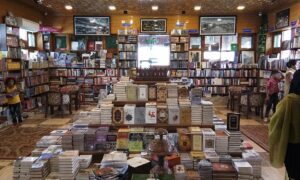
But the peg of the story is a bookshop wherein characters often interact and meet.
It is not a usual bookshop. It is also a place where she first encounters the spiritual manifestation.
It is the place where she recognises a soul even before meeting him.
The story and characters are different.
It has some typos, which do not serve the sacrosanct story well.
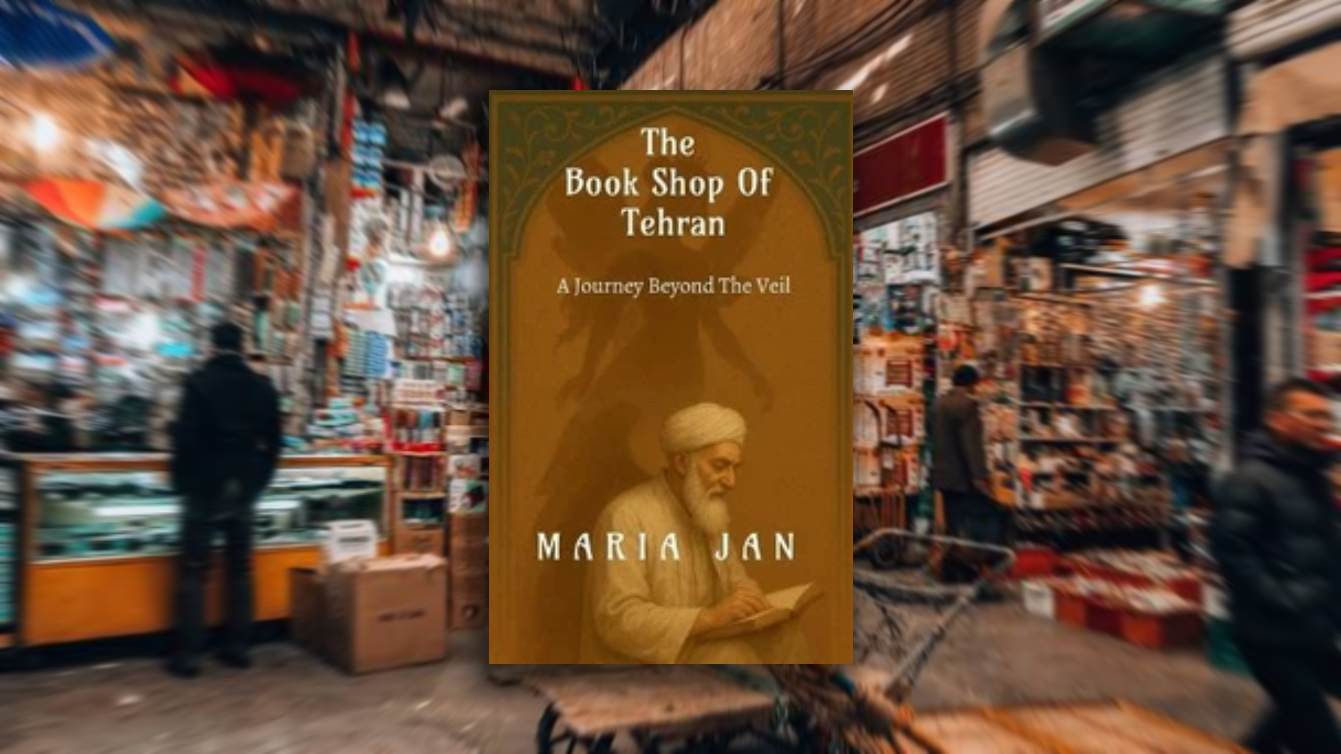
The cover photo seems to be AI-generated of a Sufi with a butterfly-like mystic creature in the backdrop.
Ideally, any writer devotes a good time to the cover of the book. They are like gates to a world of words.
As one flips through the pages of the book, the writer’s poetic prose never lets you lift your head off it.
The book does not fall into platitudes of failed love or love amidst conflict.
It is a departure from conflict by a Kashmiri author. It skillfully navigates the controversial outer world while negotiating the conflicts deep within the recesses of souls.
There are conversations between two souls who eventually fall in love, tethered by a spiritual bond.
The conversations are laced with sentences of spiritual beads. It is a book about a journey without destination, deep within the recesses of the soul amidst sacred silence.
The book is laced with themes of longing, love, spirituality, mysticism, hope, surrender, and metaphysical and quantum physics concepts.
It is the conversation between the seen and unseen. Between twin flames of souls.
It rarely deals with worldly, materialistic and mundane things and also expresses an aversion to them.
It deals with spiritual connections between souls, which the author says have memory and recognise each other.
The book still includes love letters addressed to Sufis, saints, poets or loved ones rather than relying on automated textual exchanges deprived of deep emotional connections.
The plot and narrative arc are gripping until the Rooh (boy), or Soul, suddenly vanishes.
His sudden departure from the story plot is designed to deliver a twist in the end that peels back more layers of the narrative.
Even though there are not many characters, the choice of limited characters seems to serve the story.
Each character has served its purpose. The characters contribute to each other’s growth, especially spiritually.
But we do not get to know much about the surroundings of the characters or their interactions with others, other than conversations between themselves.
It sometimes feels like limerence, only if the Rooh (soul) didn’t choose to depart.
Perhaps it demands more imagination and skills!
The book is wedged between dreams and reality.
It will rarely bore those who are seekers of spiritual love and deep connections.
There is minimal world in it.
The book is written in the language of souls and silence, where poets and mystics are often quoted. They are the ones who illuminate the story, and the story hinges on their wisdom.
There are tender moments of love which are endearing, like the celebration of a birthday in cold January when he wanted to meet her.
He waited for her in a quiet café in one of Srinagar’s older alleys, on that old wooden bridge.
She describes the old city as downtown, not Shehr-e-Khaas. What does downtown connote? Something opposite of elite uptown? Its use is now commonplace, with disregard for the history and culture of the place.
He cut the cake, but she described his personality by the way he sliced the cake: gentle!
There was no resistance in him. He did not deny sorrow, nor did he cling to joy.
He accepted both at his door, and each carried a hidden message from the beloved.
There are moments in our lives when we love someone or some people, and we don’t know why.
Even before the world was born, the souls were gathered in that Alam-e- Arwah.
Every seeker, every lover, every sufi in the streets of Shiraz or Srinagar is simply trying to return to that first home.
It answers questions like: Why do we love someone unconditionally? Do we like what we identify with? What is surrendering in love? And what does it do to the soul, which is a temporary inhabitant of this transient world? About letting go.
The writer of this book is what a writer should be like: sensitive and full of observations.
She is a promising poet veiled with beautiful prose. I hope her sensitivity turns now outwards towards the aching, broken world we wake up each morning.
Beyond her Rooh (soul), towards the world that has learned the art of not seeing and feeling and moving on with indifference and shallow ritualistic concerns and performances.