

India has joined a US-led initiative aimed at securing critical artificial intelligence (AI) technologies and supply chains against potential risks linked to China, The Financial Times reported.
The initiative, known as the San Francisco Declaration on the Secure Foundations of Enduring Prosperity, has been signed by nine countries: the United States, Japan, Australia, Israel, the United Kingdom, South Korea, India, Qatar and the United Arab Emirates.
Germany, Sweden, the Netherlands and the European Commission are also expected to join the agreement next week.
The development comes as Washington steps up efforts to restrict China’s access to advanced AI chips, particularly those manufactured by Nvidia. US President Donald Trump has reportedly directed authorities to crack down on companies suspected of illegally supplying the Chinese market with the company’s sophisticated semiconductors.
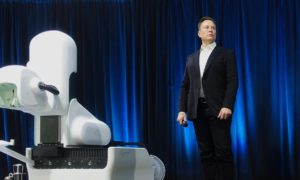
The agreement assumes added significance amid growing scrutiny surrounding Nvidia and its leadership. The report emerges just days after Jensen Huang reportedly admitted to an extramarital relationship with a woman identified as Alice Huang, who has been alleged to have links to Chinese intelligence. Huang subsequently stepped down as Nvidia’s CEO.
What is Pax Silica and why is it important?
The declaration represents an expansion of Pax Silica, a US-led initiative launched in December 2025 to strengthen global AI supply chains and limit dependence on strategic bottlenecks controlled by China.
The programme spans the broader AI ecosystem, covering semiconductors, critical minerals, advanced manufacturing, energy infrastructure and data centres.
One of the central challenges is the international nature of AI supply chains. Semiconductor design, manufacturing equipment, production and distribution often involve several countries, making it difficult for any single government to secure the entire process.
US Under-Secretary of State for Economic Affairs Jacob Helberg told The Financial Times that the initiative would create a common framework for safeguarding strategically important technologies.
“What makes the San Francisco Declaration historic is that Pax Silica partners have agreed to treat the security of those technologies and the infrastructure behind them as a shared responsibility,” Helberg said.
Under the agreement, participating countries will establish working groups to assess vulnerabilities, share relevant information and identify potential economic hubs capable of attracting investment in AI-related industries.
India’s participation
India’s inclusion could strengthen its role in the international technology ecosystem as New Delhi looks to expand semiconductor production, develop AI infrastructure and build domestic technological capabilities.
The move also reflects closer cooperation between India and the United States in strategically important technology sectors. India formally became part of Pax Silica in February 2026, during the India AI Impact Summit.
Membership could open up opportunities for Indian businesses to become part of trusted international supply chains, attract foreign investment and collaborate with major global technology companies.
However, joining the initiative alone will not guarantee an expansion of domestic semiconductor manufacturing or remove India’s reliance on overseas technology. The country will still need to build manufacturing capacity, ensure access to critical minerals and develop the infrastructure required to support its AI ambitions.
Commenting on India’s role, AI and public policy expert Sagar Sai told NDTV that the country’s focus should extend beyond being a consumer of AI products and services.
“India’s opportunity is not simply to become another consumer of AI technology. It is to build capabilities across the supply chain, from infrastructure and semiconductor manufacturing to applications and enterprise AI. Trusted international partnerships can accelerate this journey, but long-term resilience will depend on developing domestic capabilities and reducing critical dependencies,” he was quoted as saying.
The agreement reflects a major transformation in the global AI landscape, with countries increasingly viewing semiconductors, computing infrastructure, critical minerals and energy resources as strategic national assets rather than simply commercial commodities.