
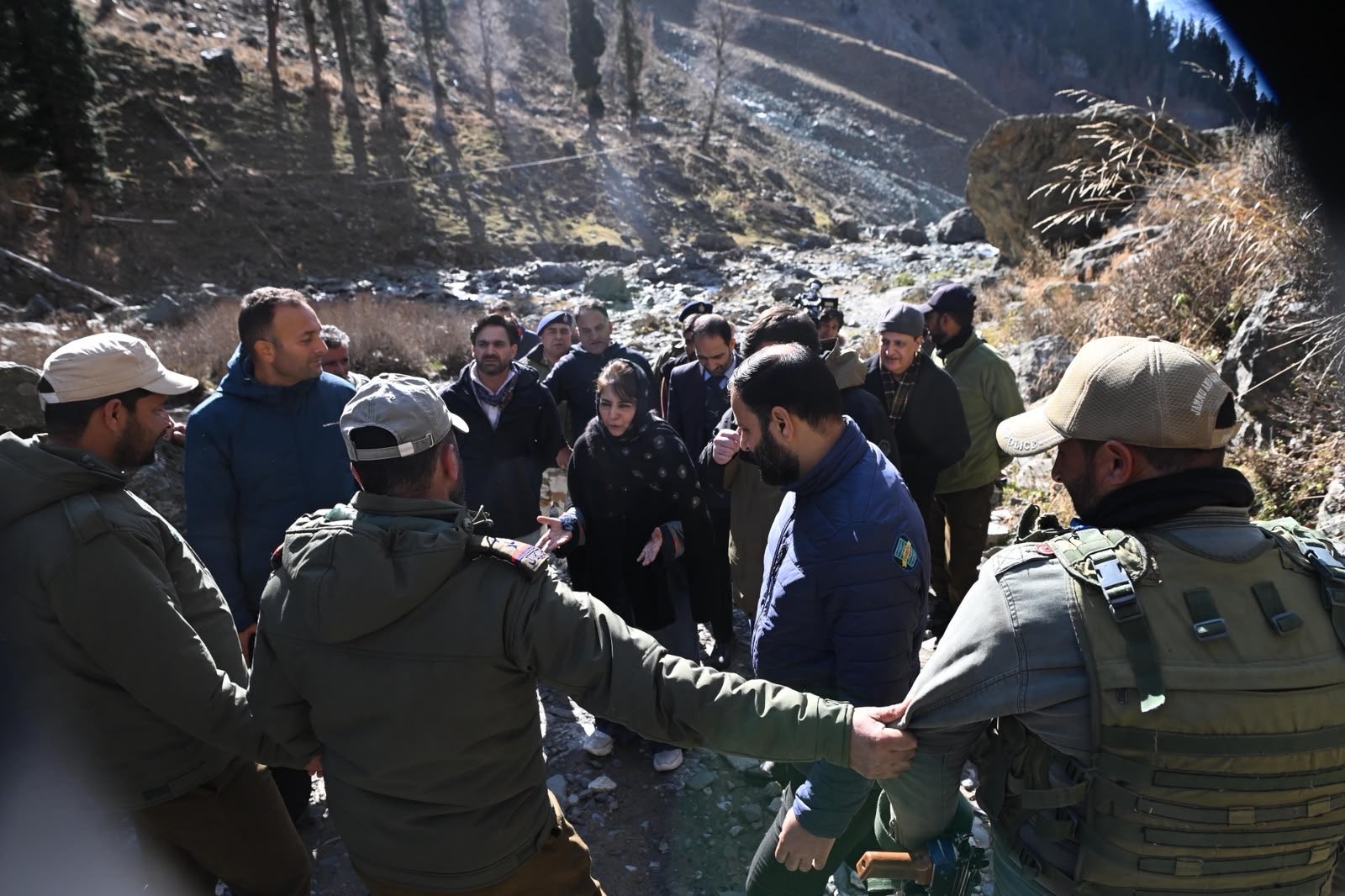

In a post on X, Mufti said her concerns about construction in the ecologically sensitive glacial region had increased and warned that unchecked activity could lead to a man-made disaster.
“My worst fears were confirmed today when police stopped me from proceeding towards Sheshnag. The questions surrounding construction in this fragile glacial ecosystem are only growing louder,” she wrote.
She said the Amarnath Cave, the annual pilgrimage and the surrounding mountains should be protected as one ecological unit.
“What is being concealed today could become a man-made disaster tomorrow. The Amarnath Cave, Yatra and surrounding mountains must be protected as one ecological whole,” Mufti added.
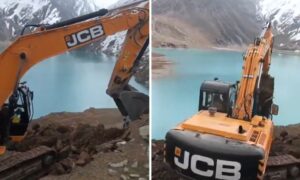
Her remarks come amid growing concerns over the use of heavy machinery and road-widening work near Sheshnag Lake, a high-altitude water body located along the traditional Amarnath Yatra route in south Kashmir.
The issue came into focus after a video showing a crawler excavator operating near the lake circulated on social media. The visuals prompted questions from political leaders, religious figures and environmental observers about the need for construction in such a sensitive area and its possible impact on the surrounding landscape.
The Border Roads Organisation (BRO), which is involved in road-related work in the region, has defended its operations. It has said the work was part of post-Yatra activities to widen and stabilise existing tracks and improve safety for pilgrims. The organisation has also maintained that measures were being taken to protect natural drainage and minimise environmental disturbance.
Several political leaders have questioned whether adequate environmental studies and safeguards were in place before the work began.
CPI(M) leader and Kulgam MLA M Y Tarigami has warned that the area’s steep slopes and loose mountain material make it particularly vulnerable to disturbance. He has called for scientific studies, environmental assessments and consultations with experts before carrying out such work.
National Conference MP Aga Syed Ruhullah Mehdi has also questioned the use of heavy machinery near the lake, while Mirwaiz Umar Farooq has stressed that facilities for pilgrims should not come at the cost of Kashmir’s fragile environment.
PDP spokesperson Muntazir Mehdi has expressed concern that careless construction could affect the lake, its catchment area and downstream water systems. Apni Party president Syed Mohammad Altaf Bukhari has also sought clarity over the reported work and called for transparency.
Sheshnag’s ecological importance
Sheshnag Lake lies along the traditional route to the Amarnath cave shrine. Pilgrims travelling from Pahalgam pass through Chandanwari, Pissu Top and Sheshnag before reaching Panchtarni and the cave. Sheshnag is an important halt on the route.
The area forms part of a fragile high-altitude Himalayan ecosystem, with glaciers, steep slopes, streams and alpine lakes connected through natural drainage systems. Changes to the terrain can affect water flow and increase the risk of soil erosion and slope instability.
One of the concerns associated with glacial regions is the possibility of glacial lake outburst floods, commonly known as GLOFs. These occur when water stored in a glacial lake is suddenly released, potentially causing destructive floods downstream.
A report published by The Tribune had identified Sheshnag and Sonsar among 14 high-risk glacial lakes in Jammu and Kashmir being considered for monitoring and risk assessment.