
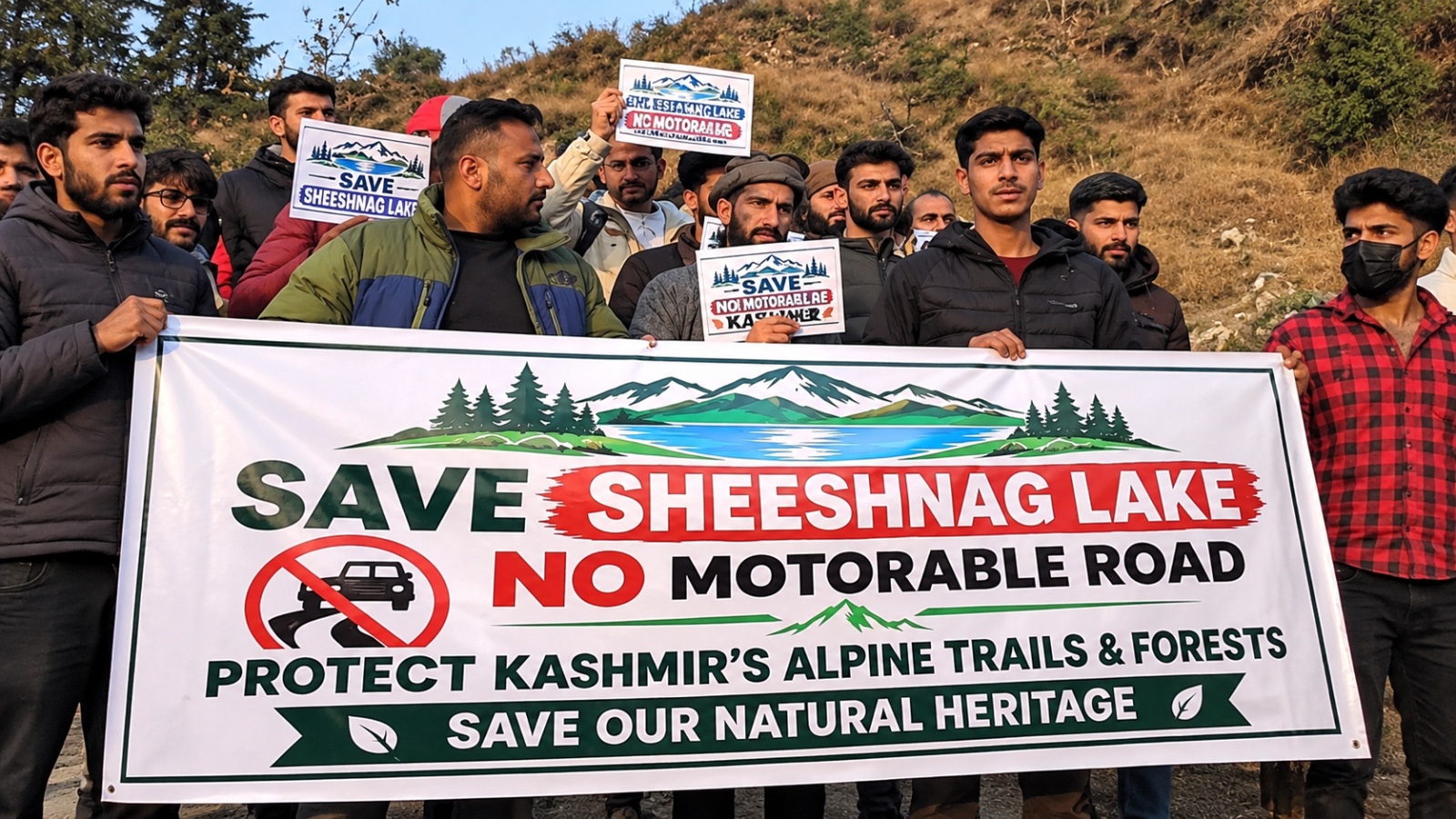

Srinagar: As demands to halt excavation near Sheshnag Lake grow, trekkers from Jammu and Kashmir staged a peaceful protest in Srinagar, opposing road construction and excavation activities near the alpine lake in south Kashmir’s Pahalgam area, amid growing concerns over the potential damage to the fragile Himalayan ecosystem.
Carrying placards, the protesters gathered on November 24 and demanded an immediate halt to construction activities, warning that the use of heavy machinery and excavation near the glacial lake could damage its sensitive ecosystem and surrounding alpine forests.
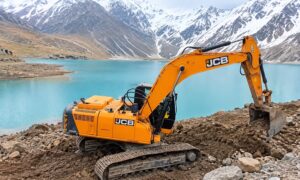
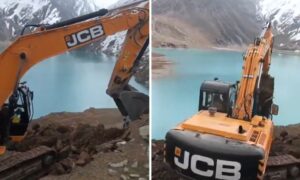
The protest comes amid mounting public concern following the circulation of videos showing heavy machinery operating near Sheshnag Lake. The visuals triggered criticism from environmentalists, trekkers and political leaders, who have raised questions over the ecological consequences of infrastructure development in the area.
While the road and track improvement works have been linked to facilitating access for Amarnath pilgrims, environmental concerns have intensified over the need to protect Kashmir’s high-altitude lakes and their fragile surroundings.
The protesters called for protection of the region’s natural heritage and urged authorities to reconsider construction activities in ecologically sensitive areas.
Sheshnag Lake, situated at an altitude of around 3,590 metres (11,780 feet), falls along the traditional Pahalgam-Chandanwari-Amarnath cave pilgrimage route. The lake is part of a sensitive glacial landscape comprising several high-altitude lakes and glaciers that also feed the Lidder stream, an important tributary of the Jhelum.
The Border Roads Organisation (BRO) has said it is widening and stabilising existing tracks along the Amarnath Yatra route to ease congestion and improve the safety of pilgrims. It has maintained that the work is confined to existing tracks and that environmental safeguards, including proper disposal of excavated material and protection of natural drainage, are being followed.
A January 2024 Detailed Project Report (DPR) prepared for the Khanabal-Baltal road project (NH-501) proposes an upgraded road corridor connecting the Anantnag-Khanabal area with Baltal, passing through Pahalgam, Chandanwari and the Sheshnag area.
The plan has fuelled apprehensions that the ongoing track-widening work could be linked to a larger road infrastructure project. However, the BRO has described its current work as widening existing pilgrimage tracks.
The issue also has a legal background. In 2012, following the deaths of pilgrims during the Amarnath Yatra, the Supreme Court took suo motu cognisance of facilities and safety arrangements along the pilgrimage routes. It directed improvements, including widening of tracks to facilitate safer movement.
However, the court cautioned that development in ecologically and climatically sensitive areas must remain within permissible limits. It also clarified that its directions should not be interpreted as an order to construct motorable metalled roads in place of existing walking tracks.
The use of heavy machinery near Sheshnag has prompted demands for an immediate halt to the work pending an independent scientific assessment.
CPI(M) leader and MLA M.Y. Tarigami has questioned whether the requisite environmental and forest clearances have been obtained and sought details about excavation, debris disposal and the project’s alignment.
The J&K Climate Action Group has also sought an independent investigation into the potential impact of the work on the lake and its surrounding ecosystem.
Mirwaiz Umar Farooq has urged people to sign an online petition titled Stop Construction Around Kashmir’s Alpine Lakes and questioned Chief Minister Omar Abdullah’s silence on the issue. The petition had attracted more than 2,600 signatures by November 24, 2026.