

Grand Mufti cites Islamic principle of Tawheed; also raises alarm over heavy machinery operations near Sheshnag Lake
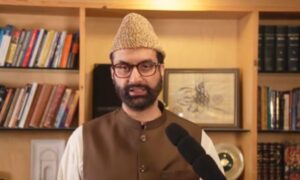
Srinagar: Jammu and Kashmir’s Grand Mufti, Mufti Nasir-ul-Islam, has said that reciting the national song ‘Vande Mataram’ and participating in programmes where it is rendered are impermissible for Muslims under Islamic law, citing the fundamental Islamic principle of Tawheed (Oneness of Allah).
In a video message issued on Thursday, the Grand Mufti said no Muslim could recite Vande Mataram, either as an act of worship or in any other form, arguing that worship and reverence of a divine nature are reserved exclusively for Allah.
“Reciting Vande Mataram and participating in such events is not permissible under any circumstances from an Islamic perspective,” he said.
He maintained that Islam prohibits associating partners with Allah or attributing divinity to any person, object, land or creation. He also cautioned against attempts to justify participation in such programmes on grounds of temporary compulsion.
The Grand Mufti criticised religious figures who attended functions where the song was rendered, observing that some participated for publicity while others might have done so without understanding the religious implications.
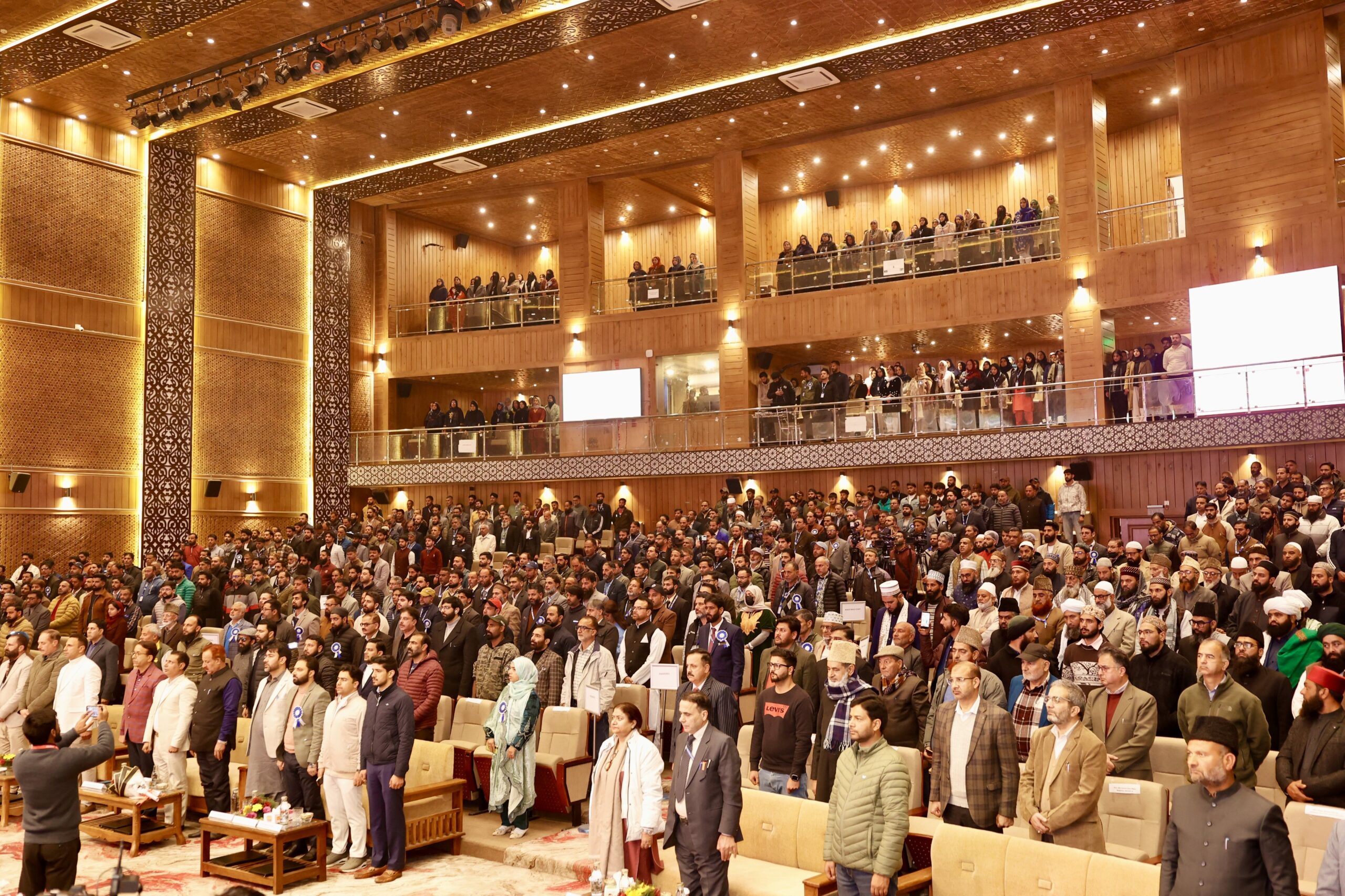
His remarks come amid a controversy triggered by the rendition of all six stanzas of Vande Mataram at the Jammu and Kashmir Waqf Board’s Waqf Day celebration held at Sher-e-Kashmir University of Agricultural Sciences and Technology (SKUAST), Srinagar, on November 23.
The event was attended by the Government of India’s Minority Affairs Minister Kiren Rijiju, J&K Waqf Board Chairperson Darakhshan Andrabi and Lok Sabha MP Mian Altaf Ahmad, among other dignitaries.
Following the event, several Muslim clerics who attended the programme faced criticism and subsequently expressed regret over their participation, saying they had neither endorsed the song in their hearts nor through their words. They also said they had sought forgiveness from Allah.
The Mirwaiz Umar Farooq-led Mutahida Majlis-e-Ulama (MMU) also strongly objected to the rendition, describing it as contrary to the religious beliefs and sensitivities of Muslims. The organisation said it was considering legal opinion and planned to submit a formal representation to the authorities against what it termed the forced inclusion of the song at official functions.
Sunni scholar Maulana Abdul Rashid Dawoodi had challenged religious organisations to issue a formal fatwa clarifying whether merely standing during Vande Mataram as part of official protocol amounts to Shirk or Kufr.
Dawoodi argued that standing during the rendition as a matter of protocol should not automatically be equated with worship and called for a clear religious ruling on the specific issue.
The controversy has intensified the debate over religious beliefs, official protocols and the rendition of the national song at government functions in Jammu and Kashmir.
Grand Mufti raises Sheshnag environmental concerns
Apart from the Vande Mataram controversy, Mufti Nasir-ul-Islam also expressed serious concern over road construction and the deployment of heavy machinery near the ecologically fragile Sheshnag Lake along the Amarnath Yatra route.
He warned that excavation, construction activities and possible damage to glaciers could have long-term consequences for Kashmir’s environment and future generations.
The Grand Mufti said considerable environmental damage had taken place in Kashmir over the past two decades, pointing to the indiscriminate clearance of forests and the deteriorating condition of water bodies, including Dal Lake, Jhelum, Sind, Manasbal and Wular.
He urged the government to take concrete measures to protect the region’s fragile ecology, stressing that environmental conservation was a matter of human survival rather than a concern confined to any particular community.