
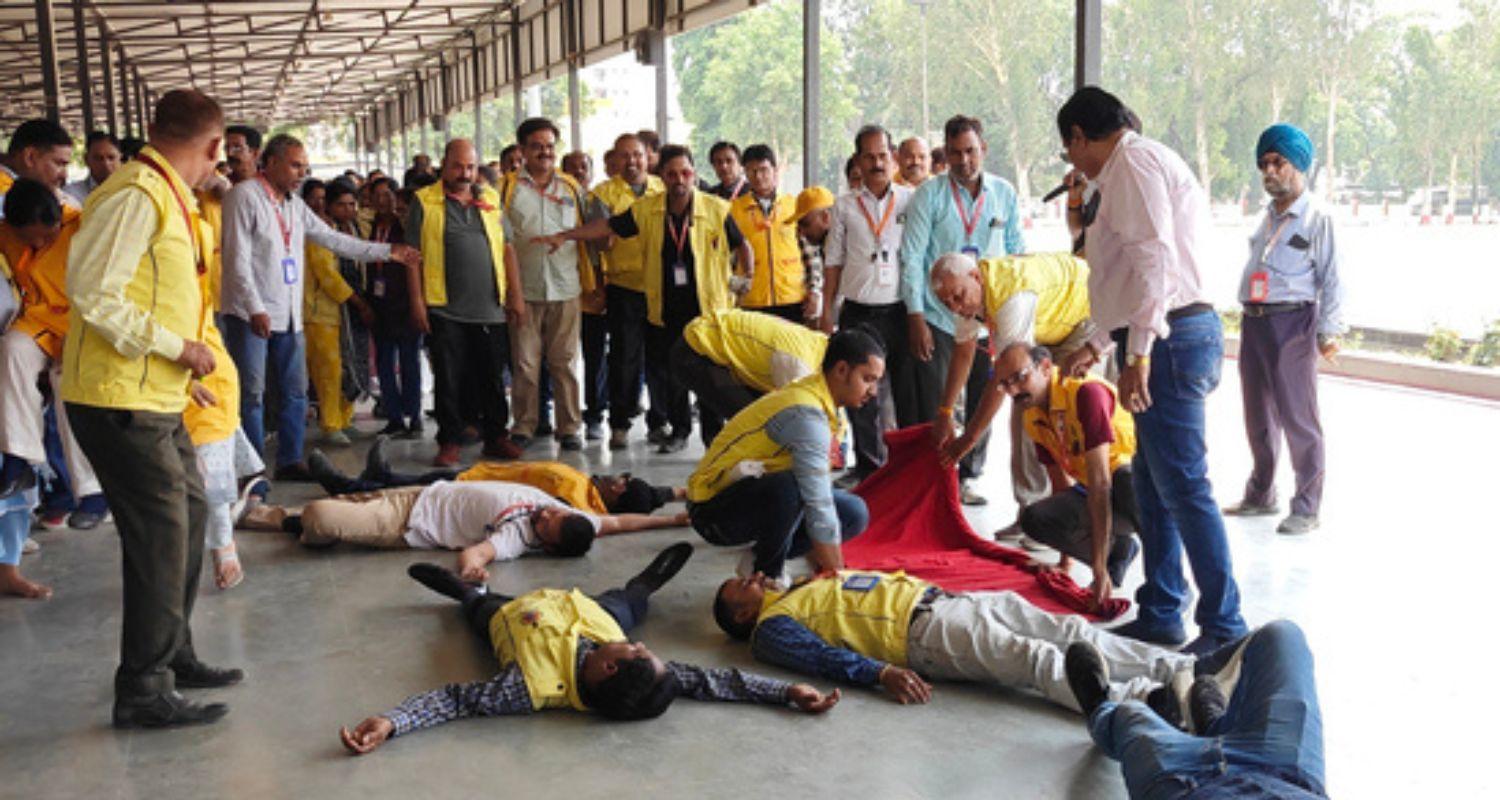

India is set to conduct mock drills tomorrow in districts of Gujarat, Rajasthan, Punjab, and Jammu and Kashmir that share a border with Pakistan.
These exercises follow weeks after India launched Operation Sindoor on the night of May 6-7, targeting militants and their supporters in Pakistan and Pakistan-administered Jammu and Kashmir.
Earlier, on May 7, similar mock drills were held in 244 districts across bordering states and union territories.
The drills aim to activate air raid warning sirens, train civilians and students in civil defence techniques, test blackout procedures, ensure early camouflage of critical infrastructure, and update and rehearse evacuation plans.
The conflict began after a deadly attack in Pahalgam, Kashmir, on April 22, which killed 28 civilians. India said Pakistan-based militants did it and launched retaliatory strikes under “Operation Sindoor,” targeting militant infrastructure across the border.
Government of India said that the strikes killed many militants and damaged singnificant infrastructure belonging to militants. Pakistan also responded, resulting in damage and casualties. On Wednesday, 15 civilians, including women and children, were killed and dozens more injured in relentless cross-border shelling by Pakistani forces. The situation worsened with reports of drone incursions, heavy artillery shelling, and civilian deaths in border areas. Both nations exchanged accusations while social media was flooded with misinformation and unverified claims about military losses.
According to government of India, the country responded to the military escalation with a multi-pronged strategy that combined strong military retaliation, active misinformation countermeasures, and enhanced civil preparedness.
Under Operation Sindoor, the mission targeted militant infrastructure deep inside Pakistan-administered territory, including suspected launch pads and logistical bases. The Indian Air Force and Army coordinated precision strikes, drone surveillance, and artillery fire along the Line of Control (LoC), especially in Kupwara, Baramulla, Rajouri, and Poonch.
After Pakistan claimed destruction of major Indian military assets like the S-400 system, airbases, and BrahMos facilities, India’s Ministry of External Affairs and Defence held a joint press conference. Wing Commander Vyomika Singh categorically denied the claims and presented timestamped satellite images to show that no such damage had occurred, calling Pakistan’s claims “malicious misinformation.”
To prepare civilians for any escalation, the Ministry of Home Affairs advised states and Union Territories to activate air raid sirens and conduct mock drills on May 7. It also issued a directive to media channels to refrain from using air raid siren sounds in programs, except for awareness campaigns, warning that casual use could desensitise the public during real emergencies.
While the situation was volatile, India maintained diplomatic communication with global partners, including the US Washington eventually brokered a ceasefire after intense overnight negotiations, which both India and Pakistan agreed to implement immediately.
Throughout the crisis, India projected a firm stance, signaling that peace efforts should not be mistaken for weakness. Official and political voices, including from the BJP, said that New India “won’t tolerate provocations or terrorism.”