
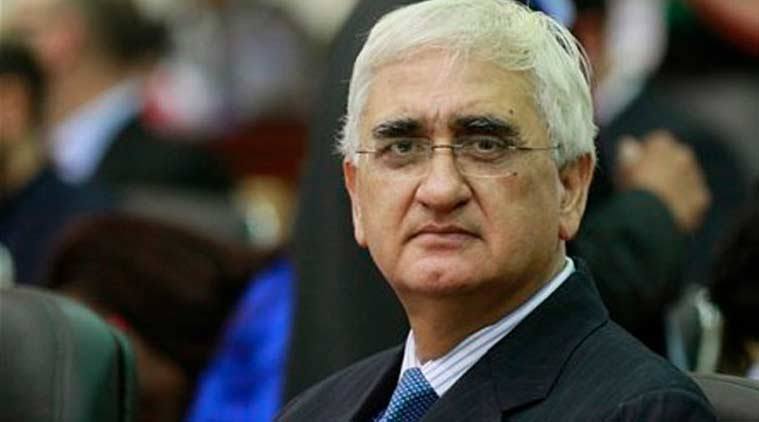

New Delhi: Senior Congress leader Salman Khurshid said the Supreme Court missed an important opportunity to examine federalism in its most critical form during hearings on Article 370, after accepting the government of India’s assurance that Jammu and Kashmir’s full statehood would be restored.
Speaking on Monday, January 19, at the launch of journalist Bashir Assad’s books “Kashmir: The Unfiltered Truth” and “House Without Witness,” Khurshid said constitutional ideals such as fraternity, equality and liberty are widely discussed, but federalism has often not received adequate attention in judicial interpretation.
He said the Article 370 case presented a rare chance for the court to assess federalism as a fundamental constitutional principle. However, he noted that the court chose not to pursue that examination after the attorney general conveyed the government’s commitment to restore statehood to Jammu and Kashmir, concluding that it need not delve deeper into the federalism debate.
On December 11, 2023, the Supreme Court unanimously upheld the GoI’s decision to revoke Article 370, which had granted special status to the former state, while directing that statehood be reinstated at the earliest.
Khurshid described federalism as “unity in diversity,” arguing that India’s strength lies in its linguistic, cultural and social plurality held together by shared democratic values. He rejected the notion that uniformity alone ensures national strength but acknowledged that differing viewpoints are a natural and essential part of democratic discourse.
He said respecting diverse perspectives—even those one disagrees with—is necessary for an honest and inclusive understanding of nationhood, adding that open exchange of ideas forms the backbone of India’s democratic identity.
Rajya Sabha MP Manoj Sinha, also speaking at the event, praised the books for presenting candid perspectives and said it was time to genuinely listen to Kashmiris instead of merely speaking about them. He highlighted how Kashmir is often romanticised as a place while the lived realities of its people are overlooked.
Reflecting on themes explored in the books, Sinha said Kashmiris endure pain and hardship yet continue to hold on to hope, adding that while suffering may make people uncomfortable, hope should inspire collective understanding and empathy.