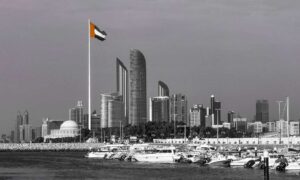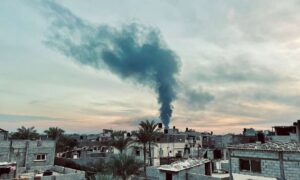

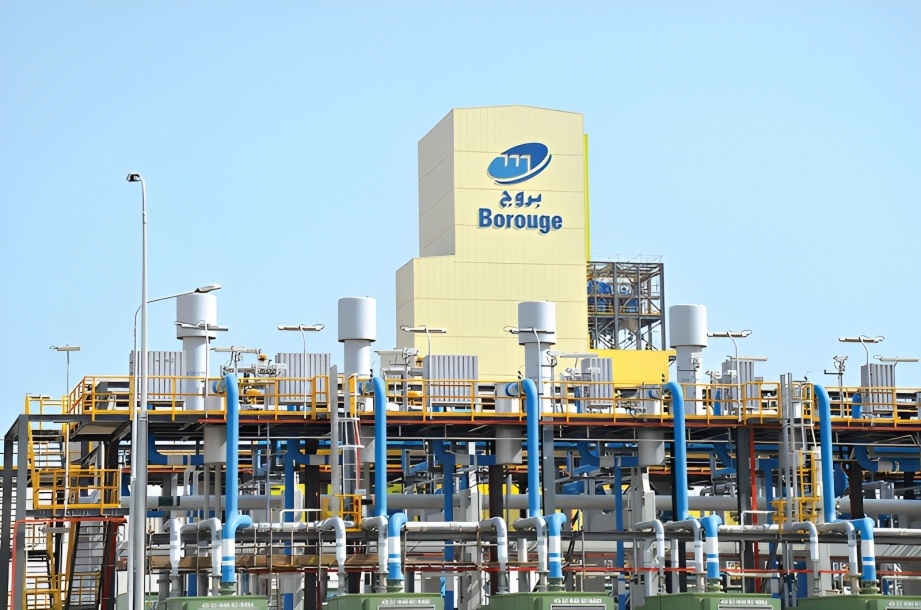

Emergency teams responded to multiple fires at the Borouge petrochemical plant in Abu Dhabi’s western region on Sunday after debris from intercepted aerial threats fell on the site.
The Abu Dhabi Government Media Office said the fires were triggered by falling debris following successful air defence interceptions. Operations at the facility, located in the Ruwais industrial area, were immediately halted as authorities began assessing the damage. No injuries were reported.
Borouge, situated over 200 km from Abu Dhabi city, is among the world’s largest producers of polyolefins, widely used in plastics, and water and gas pipelines.
Meanwhile, regional tensions continued to escalate. The Israeli military said it had struck more than 120 targets across central and western Iran in the past 24 hours, targeting missile systems, drone infrastructure and air defence sites, including facilities linked to the Islamic Revolutionary Guard Corps. No independent verification of these claims was available.
Israel also reported incoming missile fire from Iran, with its air defence systems activated to intercept threats. Prime Minister Benjamin Netanyahu said Israel, along with the United States, would remain firm amid attacks targeting Jerusalem.
According to Israel’s health ministry, 108 people were hospitalised over the past day due to injuries linked to the conflict involving Iran and Hezbollah, most with minor wounds. A total of 138 people remain hospitalised, while over 6,800 have been treated for war-related injuries since late February.
In Iran, five people were reported killed overnight in southwestern regions during strikes linked to efforts to recover a downed US fighter jet crew member, as per Iranian media reports.
Elsewhere, Lebanon’s National News Agency said an Israeli air strike in southern Lebanon killed a displaced family of five, including three children.
The conflict has also affected energy infrastructure across the Gulf. In Bahrain, a storage facility operated by Bapco Energy caught fire following an Iranian attack but was later brought under control without casualties. Saudi Arabia’s defence ministry said it intercepted and destroyed a projectile in recent hours.
Aid agencies warned that the ongoing hostilities are disrupting global supply chains, including critical routes such as the Strait of Hormuz, impacting the delivery of food and medical supplies. The World Food Programme reported delays in shipments, while the International Rescue Committee said medical supplies meant for Sudan are stranded in Dubai. Therapeutic food shipments for Somalia are also stuck in India, and the United Nations Population Fund has delayed sending equipment to multiple countries.
Separately, Iranian media reported the execution of two men accused of attacking a military facility in Tehran earlier this year. There were also claims of additional US aircraft losses during a rescue mission, though these remain unverified.
On the diplomatic front, Egypt’s Foreign Minister Badr Abdelatty held discussions with US envoy Steve Witkoff and Iranian Foreign Minister Abbas Araghchi on proposals aimed at easing tensions.
In a separate development, a British flight attendant was arrested in the UAE after sharing an image related to a drone strike in a private messaging group and was later charged under cybercrime laws.