

President Donald Trump has downplayed concerns over rising inflation, saying he “loved” inflation despite new data showing consumer prices climbed by more than 4%.
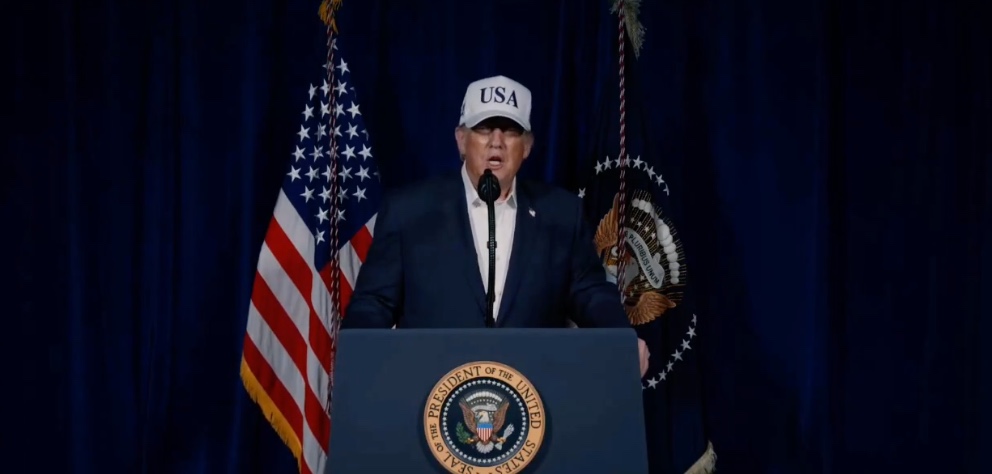
Responding to reporters’ questions about US government figures showing inflation recorded its sharpest increase in three years in May, and whether that could hurt Republican prospects ahead of November’s midterm elections, Trump said: “I love the inflation.”
Trump linked inflationary pressures to the ongoing conflict with Iran and described his decision to approve a covert operation involving oil tankers in the Strait of Hormuz. He said the move was aimed at preventing even higher costs and inflation. “It was worth it to me,” Trump said, describing the operation as successful.
Expressing confidence that prices would ease once the conflict ends, Trump said: “When it’s over, you will see oil drop to where it was before.” He added: “It’s coming down. It’s going to come down like a rock.”
Trump has characterised the war with Iran as a necessary national security measure, even as Tehran’s closure of the Strait of Hormuz has increased the cost of gasoline, fertiliser and other goods, contributing to higher inflation.
The rise in prices has also raised concerns that the US Federal Reserve may delay interest rate cuts, which could otherwise reduce borrowing costs. Trump has repeatedly called for lower rates since returning to office last year.
Republicans are trying to retain control of both the House of Representatives and the Senate, but party members are worried that voter frustration over the cost of living could benefit Democrats in the upcoming elections.
Although Trump’s 2024 presidential campaign heavily focused on reducing inflation, his approval ratings, including assessments of his handling of living costs, have fallen to the lowest levels of his political career.
Meanwhile, efforts to restore tanker traffic through the Strait of Hormuz remain stalled. Industry leaders and analysts have warned that oil markets could face another significant shock in the coming weeks, potentially affecting broader financial markets.
Even if Washington and Tehran reach an agreement soon, analysts expect supply disruptions to continue for months, with impacts likely extending into 2026. While US consumers may be less exposed to fuel price spikes than some other countries, sustained higher energy costs could eventually weigh on consumer spending.
Last month, Trump dismissed concerns about the financial difficulties facing Americans while pursuing a deal with Iran and simultaneously warning of possible renewed military action.
He said: “I don’t think about Americans’ financial situation. I don’t think about anybody. I think about one thing: We cannot let Iran have a nuclear weapon.”