A Sunday outing became the sharpest lesson my children have had all year, and I didn’t plan any of it.
My daughter asked me, somewhere between the second and third raceway, whether fish could feel cold.
She is five and is a keen observer who is full of questions.
Those questions are why I am writing this.
It was a Sunday trip to the Khyber Himalayan Trout Farm. My children, a few other families, and I set out with the usual hope that an educational outing would be worthwhile.
The children were between six and fifteen.
The parents, myself included, believed a trip like this was good for the children, born out of a conscious decision to raise children as they should be. Away from screens.
The farm was nothing as I had imagined. When someone says “aquaculture facility”, you picture concrete, pipes and a faint industrial smell. But Khyber Himalayan Trout blends so naturally into Kashmir’s landscape that it feels as if it has always belonged there.
The raceways run with cold, clear water. The infrastructure is modern and meticulous: water quality, temperature, feeding schedules and health monitoring are governed by systems that a dedicated team of specialists oversees at every stage.
Watching it all unfold, I felt something I rarely feel when someone explains how food is produced. I came away with a deeper appreciation of the knowledge, skill, and care it takes to feed people well. The children, too, were genuinely curious and engaged.
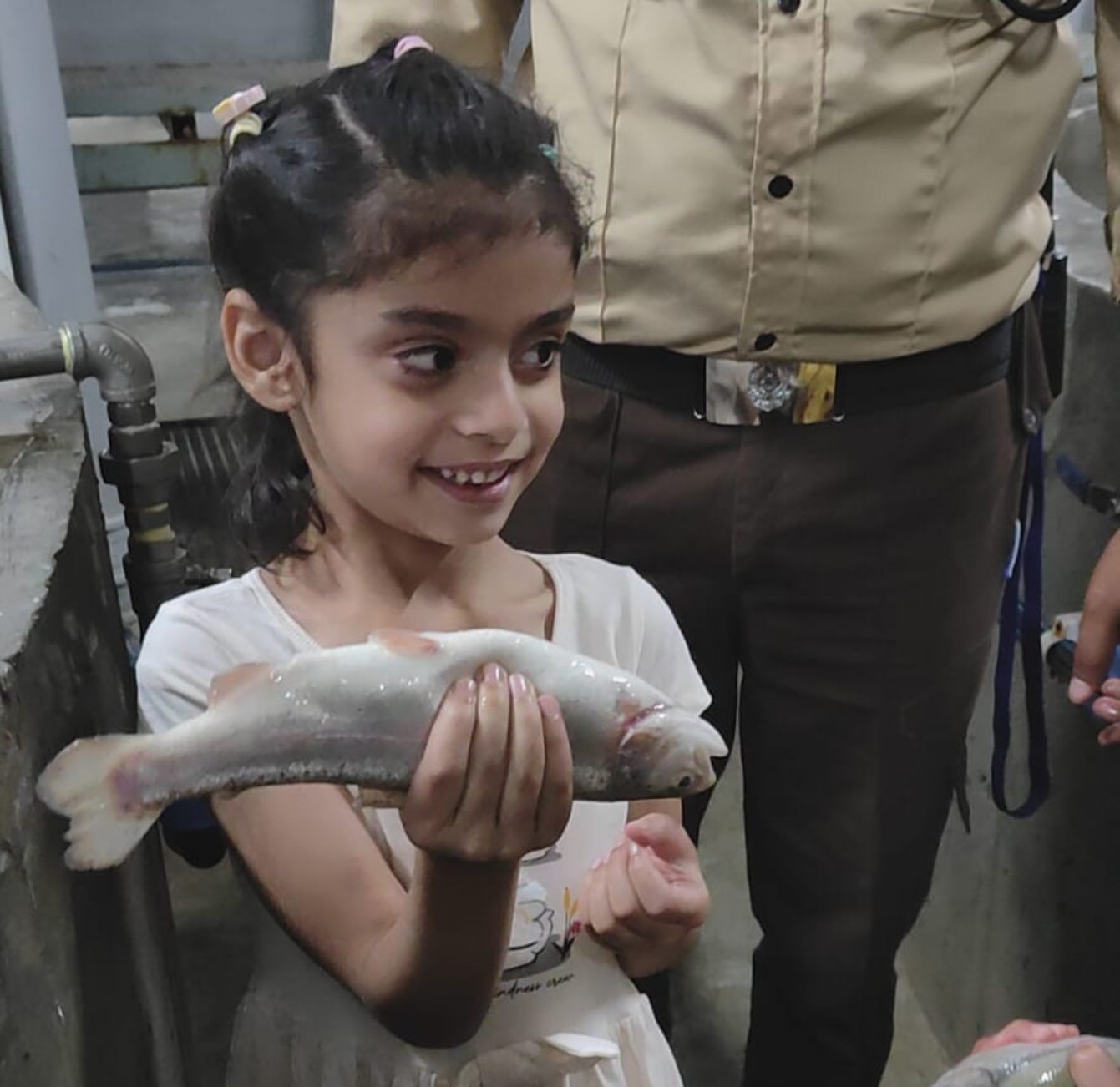
A professional guided us through the facility with genuine enthusiasm for his work. My daughter asked question after question about the fish and how they are raised. The man answered each one with care and respect, and I could see my little one walk away a little more confident.
This is experiential learning in its simplest form.
A child learns by seeing, asking, and listening, without the pressure of marks or exams. The experience becomes the lesson, and that is why it lasts.
As a home-schooling family, we think a lot about how children learn best. School often teaches ideas in a structured way, but many lessons remain far removed from real life.
That distance between classroom learning and lived experience can be much larger than we realise.
Real understanding often begins when children can connect what they learn with the world around them.
The farm does not stop at fish, but is an experience.
Even though it is not open to the public in general, there is a cafeteria, a conference hall, staycation facilities, and offices for its employees that signal genuine institutional ambition.
It functions as a destination rather than a production site. The hospitality dimensions surprised many of the parents.
The blend of careful science and beautiful surroundings made the place feel special. It was the type of place that made me want to stay a little longer.
Standing there, with the mountains in the background and the sound of flowing water all around us, I understood why people love coming to places like this. Some landscapes naturally draw you in and stay with you.
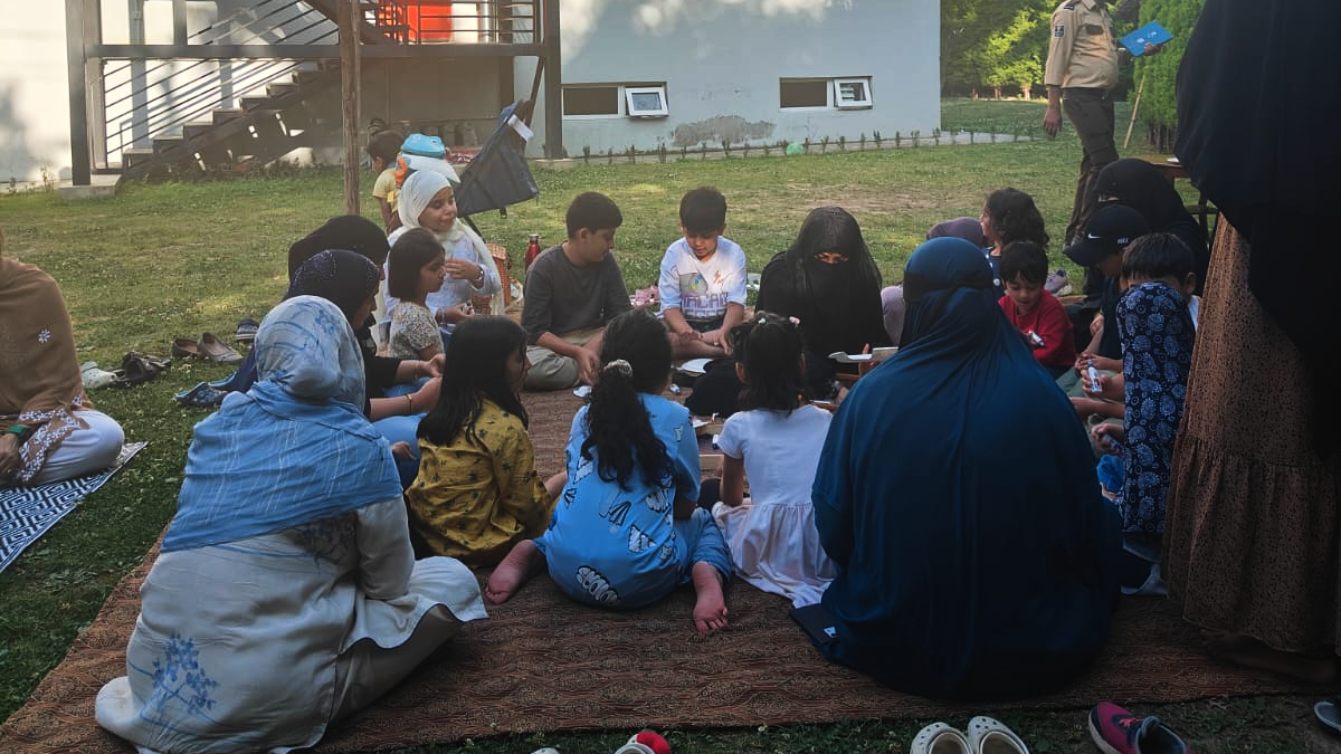
We gathered later, the mothers and children, for a storytelling session organised with care and intelligence by the people who made the day possible: Booyni Breeze, with the support of Baagmanzuk.
The story was about Prophet Yunus and his encounter with a great fish, a reminder of faith, patience, and humility.
The children had spent the morning beside fish, so the story felt more real and meaningful to them.
Some lessons stay longer when they are connected to a place and an experience.
Then came the craft activity, guided by Artsphere, an art studio whose instructor understood something that I have spent years trying to articulate to sceptical relatives: that making something with your hands is not a break from learning. It is actually learning through a different door.
The children made fish from simple materials. They were proud of what they made with an intensity that a multiple-choice test has never once produced in my own children. They carried those fish home, with a seriousness that is almost comically disproportionate to the object.
The meal came last: fresh trout, prepared at the farm, served close enough to its source that the distance between pond and plate felt almost theoretical.
The trout was fresh, simple, and delicious. Even my daughter, who usually avoids fish, ate it without hesitation.
As we shared the meal, the children compared favourites, talked about the food, and, without realising it, appreciated it a little more because they now knew where it had come from.
That evening, my daughter sat down and drew a fish without anyone asking her to. The experience had taken root in her, something no worksheet or screen could have achieved.
Genuine experiences have a way of staying with us.
Designing my child’s life away from screens and the digital world, the next experience is awaiting her.
Kashmir is full of learning opportunities, from its landscapes and farms to its crafts and food traditions.
The visit to the Khyber Himalayan Trout Farm, organised by a committed community group, brought many of these lessons together in a single Sunday for a group of curious children.
My daughter still wants to know whether fish feel cold. We looked it up together. She has a theory now, and it is not a bad one.
That question, asked beside a raceway in the mountains of Kashmir, was the beginning of something.
That is what a good classroom does. It begins things.













A Sunday outing became the sharpest lesson my children have had all year, and I didn’t plan any of it.
My daughter asked me, somewhere between the second and third raceway, whether fish could feel cold.
She is five and is a keen observer who is full of questions.
Those questions are why I am writing this.
It was a Sunday trip to the Khyber Himalayan Trout Farm. My children, a few other families, and I set out with the usual hope that an educational outing would be worthwhile.
The children were between six and fifteen.
The parents, myself included, believed a trip like this was good for the children, born out of a conscious decision to raise children as they should be. Away from screens.
The farm was nothing as I had imagined. When someone says “aquaculture facility”, you picture concrete, pipes and a faint industrial smell. But Khyber Himalayan Trout blends so naturally into Kashmir’s landscape that it feels as if it has always belonged there.
The raceways run with cold, clear water. The infrastructure is modern and meticulous: water quality, temperature, feeding schedules and health monitoring are governed by systems that a dedicated team of specialists oversees at every stage.
Watching it all unfold, I felt something I rarely feel when someone explains how food is produced. I came away with a deeper appreciation of the knowledge, skill, and care it takes to feed people well. The children, too, were genuinely curious and engaged.
A professional guided us through the facility with genuine enthusiasm for his work. My daughter asked question after question about the fish and how they are raised. The man answered each one with care and respect, and I could see my little one walk away a little more confident.
This is experiential learning in its simplest form.
A child learns by seeing, asking, and listening, without the pressure of marks or exams. The experience becomes the lesson, and that is why it lasts.
As a home-schooling family, we think a lot about how children learn best. School often teaches ideas in a structured way, but many lessons remain far removed from real life.
That distance between classroom learning and lived experience can be much larger than we realise.
Real understanding often begins when children can connect what they learn with the world around them.
The farm does not stop at fish, but is an experience.
Even though it is not open to the public in general, there is a cafeteria, a conference hall, staycation facilities, and offices for its employees that signal genuine institutional ambition.
It functions as a destination rather than a production site. The hospitality dimensions surprised many of the parents.
The blend of careful science and beautiful surroundings made the place feel special. It was the type of place that made me want to stay a little longer.
Standing there, with the mountains in the background and the sound of flowing water all around us, I understood why people love coming to places like this. Some landscapes naturally draw you in and stay with you.
We gathered later, the mothers and children, for a storytelling session organised with care and intelligence by the people who made the day possible: Booyni Breeze, with the support of Baagmanzuk.
The story was about Prophet Yunus and his encounter with a great fish, a reminder of faith, patience, and humility.
The children had spent the morning beside fish, so the story felt more real and meaningful to them.
Some lessons stay longer when they are connected to a place and an experience.
Then came the craft activity, guided by Artsphere, an art studio whose instructor understood something that I have spent years trying to articulate to sceptical relatives: that making something with your hands is not a break from learning. It is actually learning through a different door.
The children made fish from simple materials. They were proud of what they made with an intensity that a multiple-choice test has never once produced in my own children. They carried those fish home, with a seriousness that is almost comically disproportionate to the object.
The meal came last: fresh trout, prepared at the farm, served close enough to its source that the distance between pond and plate felt almost theoretical.
The trout was fresh, simple, and delicious. Even my daughter, who usually avoids fish, ate it without hesitation.
As we shared the meal, the children compared favourites, talked about the food, and, without realising it, appreciated it a little more because they now knew where it had come from.
That evening, my daughter sat down and drew a fish without anyone asking her to. The experience had taken root in her, something no worksheet or screen could have achieved.
Genuine experiences have a way of staying with us.
Designing my child’s life away from screens and the digital world, the next experience is awaiting her.
Kashmir is full of learning opportunities, from its landscapes and farms to its crafts and food traditions.
The visit to the Khyber Himalayan Trout Farm, organised by a committed community group, brought many of these lessons together in a single Sunday for a group of curious children.
My daughter still wants to know whether fish feel cold. We looked it up together. She has a theory now, and it is not a bad one.
That question, asked beside a raceway in the mountains of Kashmir, was the beginning of something.
That is what a good classroom does. It begins things.
Recommended for you