

The ₹100 crore project in Ganderbal combines global aquaculture technology with Kashmir’s cold waters to enable year-round trout production.
Kangan: Denmark’s water engineering, Germany’s precision systems and Kashmir’s glacial rivers have come together in an unlikely partnership that could redefine cold-water aquaculture in Kashmir.
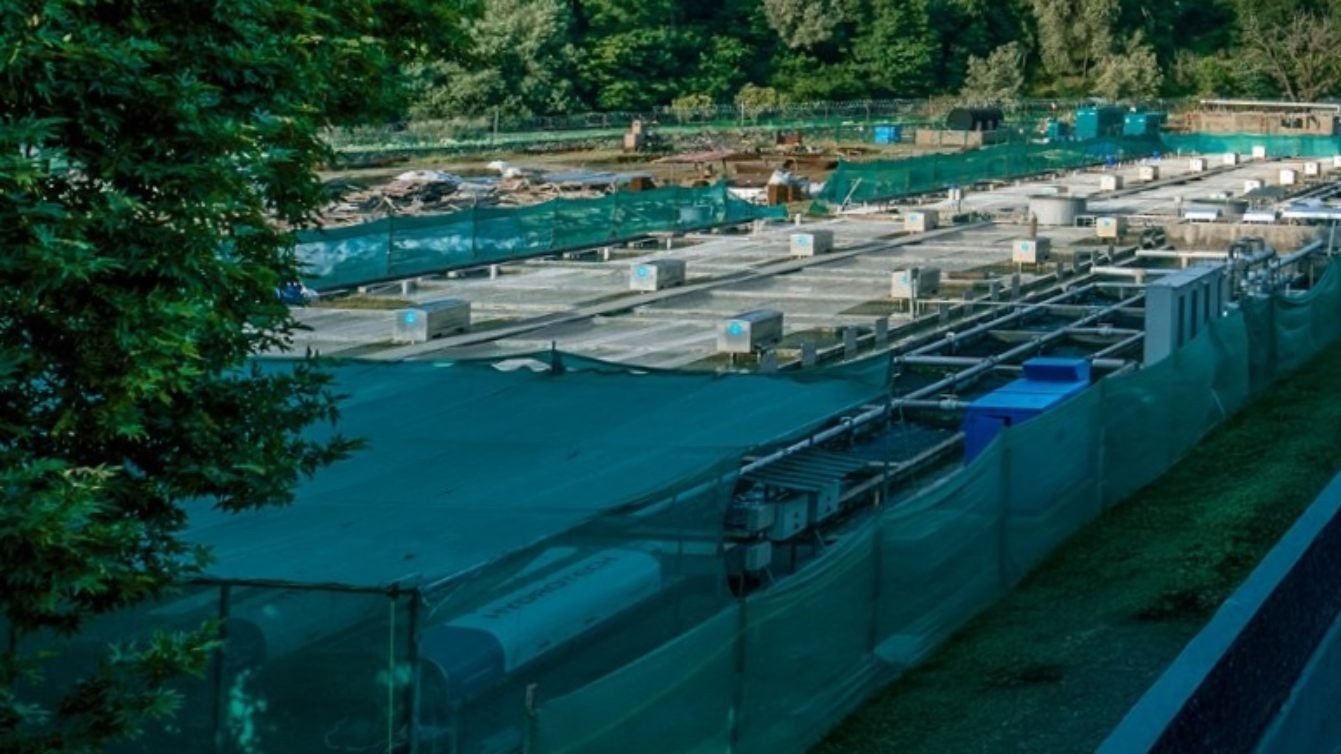
Along the banks of the River Sindh in Akhal village of central Kashmir’s Ganderbal district, a trout farming project is combining advanced international aquaculture technology with the Valley’s naturally cold waters in a bid to transform cold-water fish production in India.
The facility, developed by Khyber Aquaculture, uses a Recirculating Aquaculture System (RAS), a technology-driven farming model that continuously monitors and controls water quality, temperature and oxygen levels to enable year-round fish production.
Spread across eight acres and built with an investment exceeding ₹100 crore, the project is being described by its promoters as India’s largest fully integrated RAS-based Himalayan trout farming facility.
Unlike conventional trout farms that depend heavily on seasonal water availability and weather conditions, the RAS system recycles most of its water, reducing freshwater consumption while creating a controlled environment for fish growth.
The technology allows trout to be farmed throughout the year and is designed to improve fish health, enhance feed efficiency and reduce the risk of disease outbreaks.
The facility currently has an annual production capacity of 1,500 metric tonnes and plans are underway to expand production to 7,000 metric tonnes over the next three to five years.
Supporting the operation is a hatchery capable of producing up to 20 million fingerlings annually, providing a large-scale foundation for cold-water aquaculture development in the region.
The project incorporates aquaculture technologies sourced from several countries, including Denmark, France, Germany, Sweden and the United States.
Precision-controlled systems maintain water temperatures between 10 and 14 degrees Celsius while ensuring optimal oxygen levels required for trout growth. Automated monitoring systems are also used to improve survival rates and maintain product quality.
Beyond fish production, the initiative seeks to establish an integrated aquaculture value chain connecting hatcheries, fish farming, processing, packaging, logistics and local farmers.
The company is working with the Jammu and Kashmir government’s Holistic Agriculture Development Programme (HADP) to support local trout farmers through improved farming practices, access to quality inputs and better market linkages.
The project is expected to generate economic benefits beyond direct employment at the facility.
According to project officials, the integrated operation could create more than 3,000 indirect livelihood opportunities across Jammu and Kashmir through fish farming, transportation, processing, packaging and related industries.
To support domestic and export markets, the facility has established modern post-harvest infrastructure, including hyper-hygienic processing lines, Modified Atmosphere Packaging (MAP) systems and an advanced cold-chain network.
The infrastructure is designed to keep fresh trout chilled for up to 10 days while preserving frozen products for up to six months.
Environmental sustainability has also been incorporated into the project’s design.
Water recirculation systems, biosecurity measures, responsible feed management, waste treatment mechanisms and continuous environmental monitoring form part of the farm’s operational framework aimed at reducing resource consumption while maintaining production efficiency.
Industry experts say the project highlights the potential of combining Kashmir’s natural advantages with modern aquaculture technology.
With global demand rising for premium, traceable and sustainably farmed seafood, the Valley’s cold Himalayan waters provide favourable conditions for trout farming.
Project developers believe that integrating advanced aquaculture systems with these natural resources could help position Jammu and Kashmir as a major centre for premium trout production in India and beyond.