
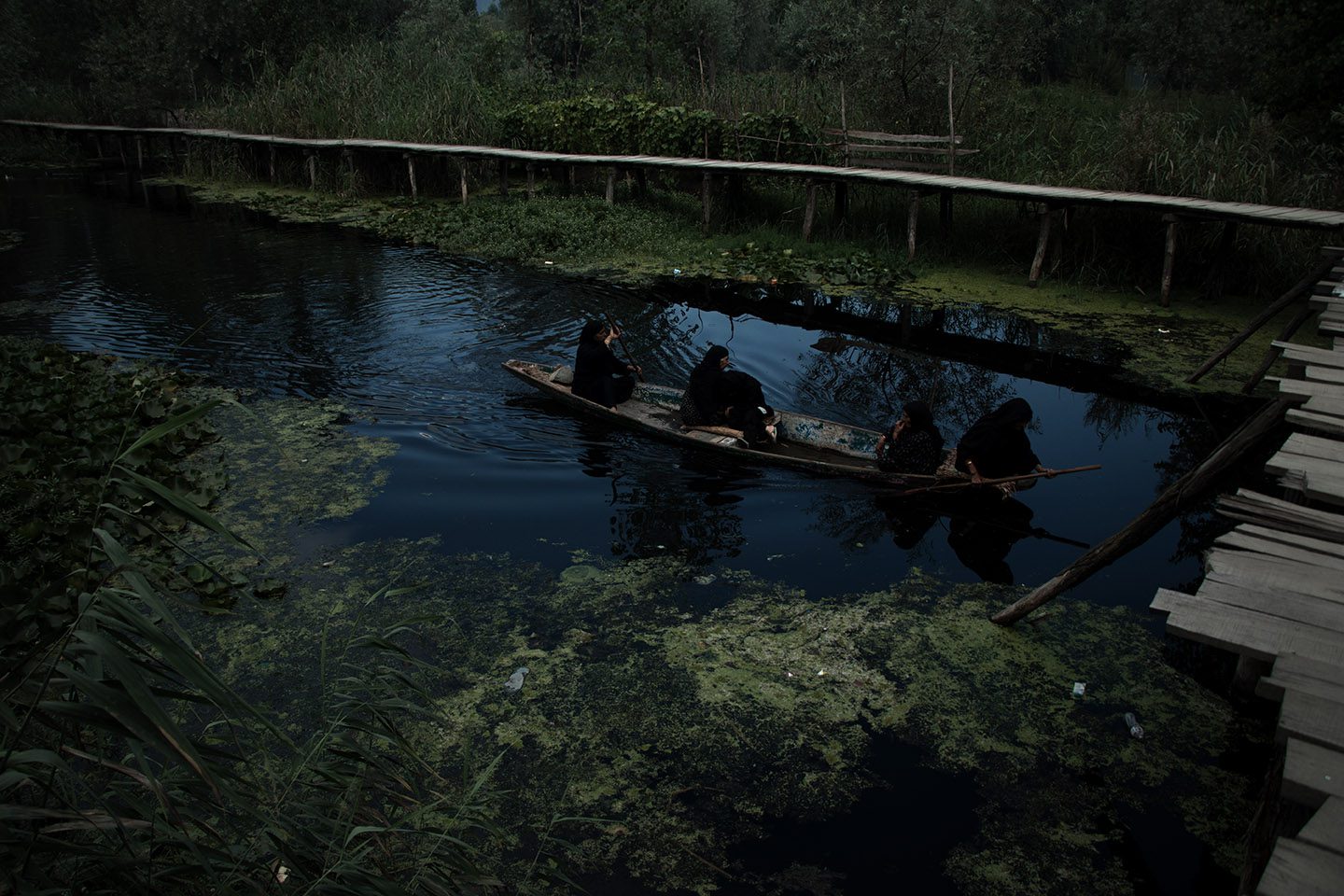

Ancient lakes and springs emerge in folklore as living archives that hold the valley’s myths, griefs and enduring sense of belonging.
There are places in Kashmir where silence does not feel empty. It feels inhabited.
The old lakes and springs of the valley carry that kind of silence, the kind that seems to remember more than the people standing beside them.
In Kashmir, water has never been merely water. It has been witness, shrine, mirror, graveyard, and memory. Long before histories were written in books, they were carried in stories whispered beside springs, in songs sung over lakes at dusk, and in legends passed from one winter to another while snow gathered quietly outside wooden homes.
Kashmiri folklore imagines lakes not as passive landscapes but as living beings capable of preserving the emotional history of a people.
One generation leaves, another forgets, empires arrive and vanish, yet the waters remain. They continue holding the echoes of what the land once was.
In this sense, the lakes of Kashmir are not only geographical spaces but archives of grief and remembrance.
Ancient Kashmiri mythology itself begins with water. According to the Nilamata Purana, the valley was once submerged beneath a vast lake known as Satisar.
The land emerged only after the sage Kashyapa drained the waters and made the valley habitable. This foundational myth shaped the Kashmiri imagination profoundly.
The memory of submergence remained embedded within the cultural consciousness of the region. Beneath every village, every orchard, every shrine, there lingered the awareness that the valley itself had once belonged to water.
Perhaps this is why Kashmiri folklore repeatedly returns to stories of drowned cities, submerged temples, and forgotten civilisations beneath lakes.
Water in these narratives is never innocent. It remembers moral failures, human arrogance, betrayal, and loss.
Among the lakes that inhabit Kashmiri memory most deeply is Wular Lake.
Vast, restless, and unpredictable, Wular has long occupied a strange place in local imagination. Unlike the delicate romanticism associated with Dal Lake, Wular evokes awe and unease.
Even its ancient name carried the sense of turbulence.
Derived from the Sanskrit Ullola, meaning “stormy” or “rising waves,” the lake was historically associated with violent waters and shifting moods.
Local traditions surrounding Wular speak of an ancient city drowned beneath its waters because of the sins of its ruler, Raja Sudrasen.
Elders in villages near the lake would say that during harsh winters, when the waters receded and the mist hung low over the surface, fragments of ruins could sometimes be seen beneath the lake.
Whether historically verifiable or not is almost secondary.
What matters is the emotional truth the legend carries: civilisations disappear, but memory refuses complete burial.
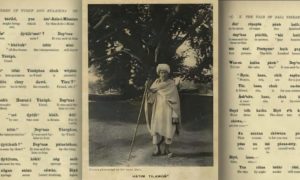
There are also stories still told quietly among older Kashmiris about wandering saints and faqirs near Wular, stories that survive not in official histories but in oral recollection.
One such narrative speaks of a saint feeding people from a vessel of rice that never emptied, no matter how many arrived hungry.
The story appears in different forms in different villages, as oral traditions often do.
No archive can fully authenticate folklore because folklore survives precisely through variation.
Yet the persistence of such stories reveals something essential about Kashmiri cultural memory: in times of poverty, flood, political violence, and hunger, people imagined holiness not through power but through feeding others.
Miracles in Kashmiri folklore are often acts of sustenance.
And perhaps that detail matters more than historians sometimes allow.
The tragedy of modern Kashmir is not only political conflict but the gradual erosion of memory itself.
The lakes still exist, but the culture surrounding them has thinned. The old boatmen who narrated legends while crossing the waters are disappearing.
The winter gatherings where stories travelled from grandmother to child grow quieter each year. Oral tradition survives now in fragments, interrupted by migration, militarisation, tourism, and the exhaustion of daily survival.
Even the lakes themselves bear wounds.
Wular, once among the largest freshwater lakes in the subcontinent, has shrunk dramatically over the decades because of encroachment, willow plantations introduced in the twentieth century, pollution, and environmental neglect.
The loss is ecological, certainly, but also cultural. When a lake disappears, an entire world of stories disappears with it.
Languages lose metaphors. Songs lose landscapes. Memory loses its geography.
In Kashmiri folklore, springs occupy a similarly sacred place.
The nags or springs scattered across the valley were traditionally believed to be inhabited by spiritual forces and serpent deities associated with fertility and protection.
Places such as Verinag and Kokernag were not simply water sources but spaces of reverence where myth and daily life merged seamlessly.
People visited these springs carrying prayers, illnesses, griefs, and hopes. Water was believed to heal because it belonged partly to the sacred world.
Even today, older Kashmiris speak about certain springs with emotional intimacy, almost as though speaking of relatives.
A spring drying up is mourned not merely as environmental damage but as spiritual loss. The disappearance of water becomes the disappearance of continuity itself.
This intimate relationship between landscape and memory gives Kashmiri folklore its peculiar emotional texture.
The stories are rarely loud. They move quietly, like mist over water. Their grief is restrained, almost inherited.
A lake remembers a village that no longer exists. A spring remembers footsteps that no longer return. Human beings forget out of necessity; landscapes do not possess that luxury.
And beneath all these narratives lies the subtle presence of politics.
Not politics in the narrow sense of slogans or speeches, but politics as historical rupture.
The lakes of Kashmir have watched generations live through exile, fear, curfews, disappearances, migrations, and silences that official histories often flatten into statistics. The folklore surrounding these waters acquires new meanings in such a context.
Stories of submerged cities and haunted waters begin to resemble metaphors for an entire people struggling against erasure.
The lakes remember what human institutions often attempt to forget.
Perhaps that is why Kashmiri folklore returns so obsessively to water. Water preserves absence better than stone.
A ruined monument eventually collapses, but a lake continues holding reflections long after the faces vanish from its shores.
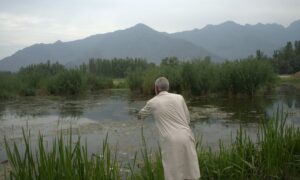
Standing beside Wular at dusk, watching the wind disturb its darkening surface, one feels that the lake is carrying centuries within it quietly, without spectacle.
It remembers saints, fishermen, drowned legends, migrations, prayers, and unnamed griefs. It remembers even those whom history no longer bothers to name.
And that may be the saddest truth hidden within Kashmiri folklore: memory survives most faithfully in places that cannot speak.