

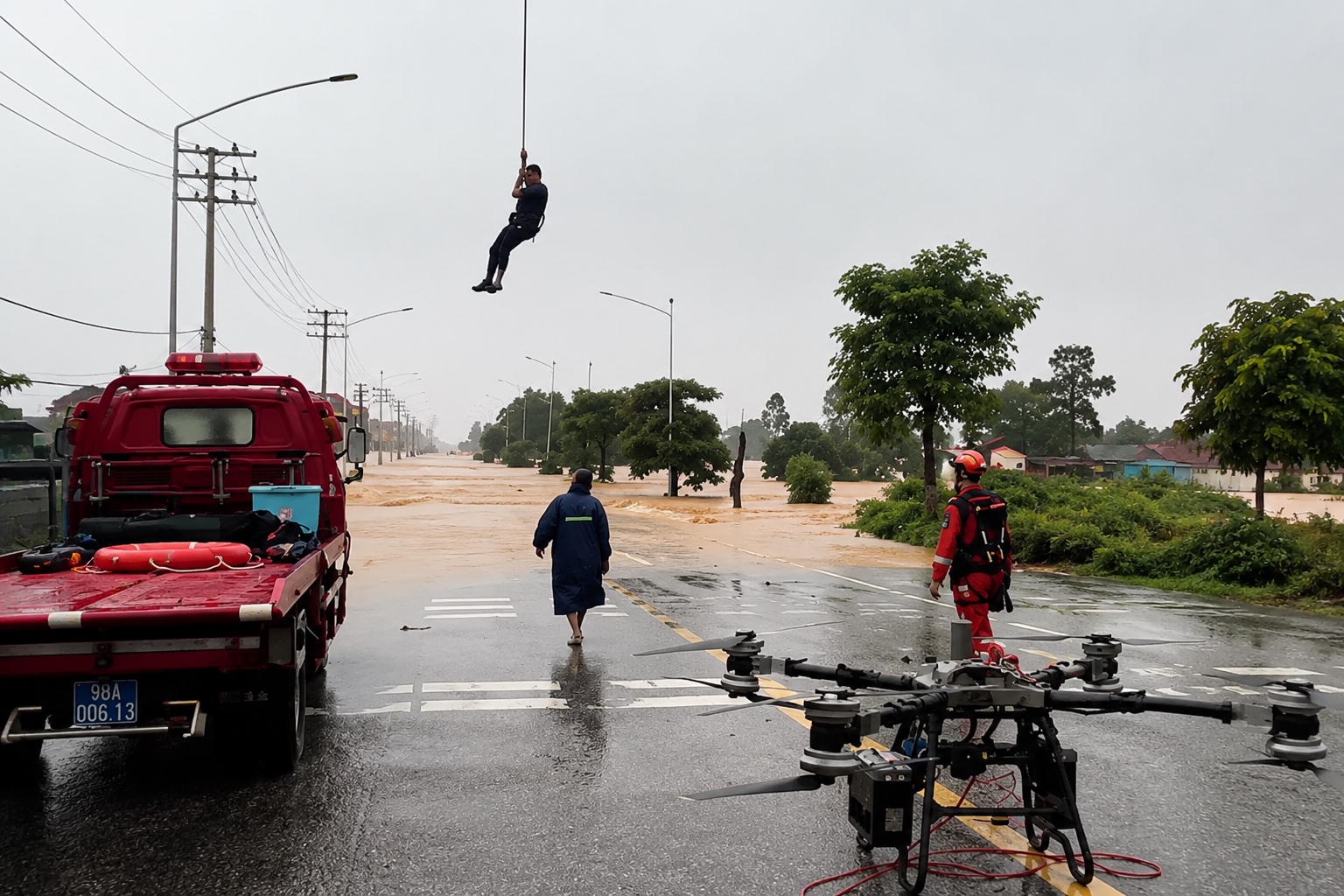

At least 39 people have died after days of torrential rain triggered severe flooding across southern China, authorities said, even as the country’s eastern coastline and Taiwan braced for the arrival of Typhoon Bavi. The country has launched drone rescue efforts after devastating floods leave thousands stranded.
The worst-hit area was Hengzhou in the Guangxi region, where a partially collapsed reservoir dam unleashed massive floodwaters, killing 26 people, according to Ding Wei, vice mayor of Nanning city. Nine people remain missing across Guangxi.
Tropical Storm Maysak, which struck the region over the weekend, brought record-breaking rainfall, causing reservoirs to overflow, inundating towns and trapping residents in homes and buildings for several days. The confirmed death toll has risen sharply from six reported earlier this week.
Meanwhile, Typhoon Bavi is expected to make landfall in China’s Fujian or Zhejiang province on Saturday after passing north of Taiwan. Although downgraded from a super typhoon, Bavi continued to pack sustained winds of up to 184 kmph, Taiwan’s Central Weather Administration said.
Authorities in Taiwan secured fishing boats at ports in preparation for heavy rain, while schools in parts of the Philippines were closed and sea travel suspended as the storm passed east of Luzon.
In Guangxi, military rescue teams evacuated more than 10,000 students and teachers stranded in flooded schools in Guigang city. State media footage showed students wearing life jackets being ferried to safety through vast stretches of muddy floodwater.
The floods also devastated wildlife. More than 100 animals, including zebras, porcupines and tropical birds, went missing after a zoo in Guigang was inundated. In Hengzhou, reports of snakes escaping from flooded farms prompted authorities to stock antivenom and issue public safety advisories.
Animal rescue efforts were also underway in Binyang county, where volunteers worked to save around 200 cats and dozens of dogs stranded by rising waters.
Rescue operations involving drones and about 5,700 boats have helped evacuate nearly 130,000 people while delivering food, drinking water and essential supplies to affected communities.
Although floodwaters have begun receding, officials warned that more rainfall is forecast over the next two days. Cleanup operations, including debris removal, road repairs and disinfection drives, are underway, while electricity has been restored to over 60,000 households.
According to China’s national meteorological centre, parts of Guangxi recorded 10 to 40 centimetres of rainfall over recent days, with some severely affected areas receiving more than 90 centimetres.
Elsewhere, severe thunderstorms and tornadoes battered central China’s Hubei province earlier this week, killing 11 people and leaving many others homeless.