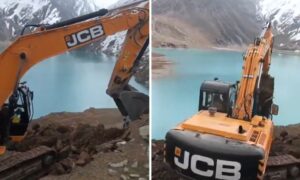

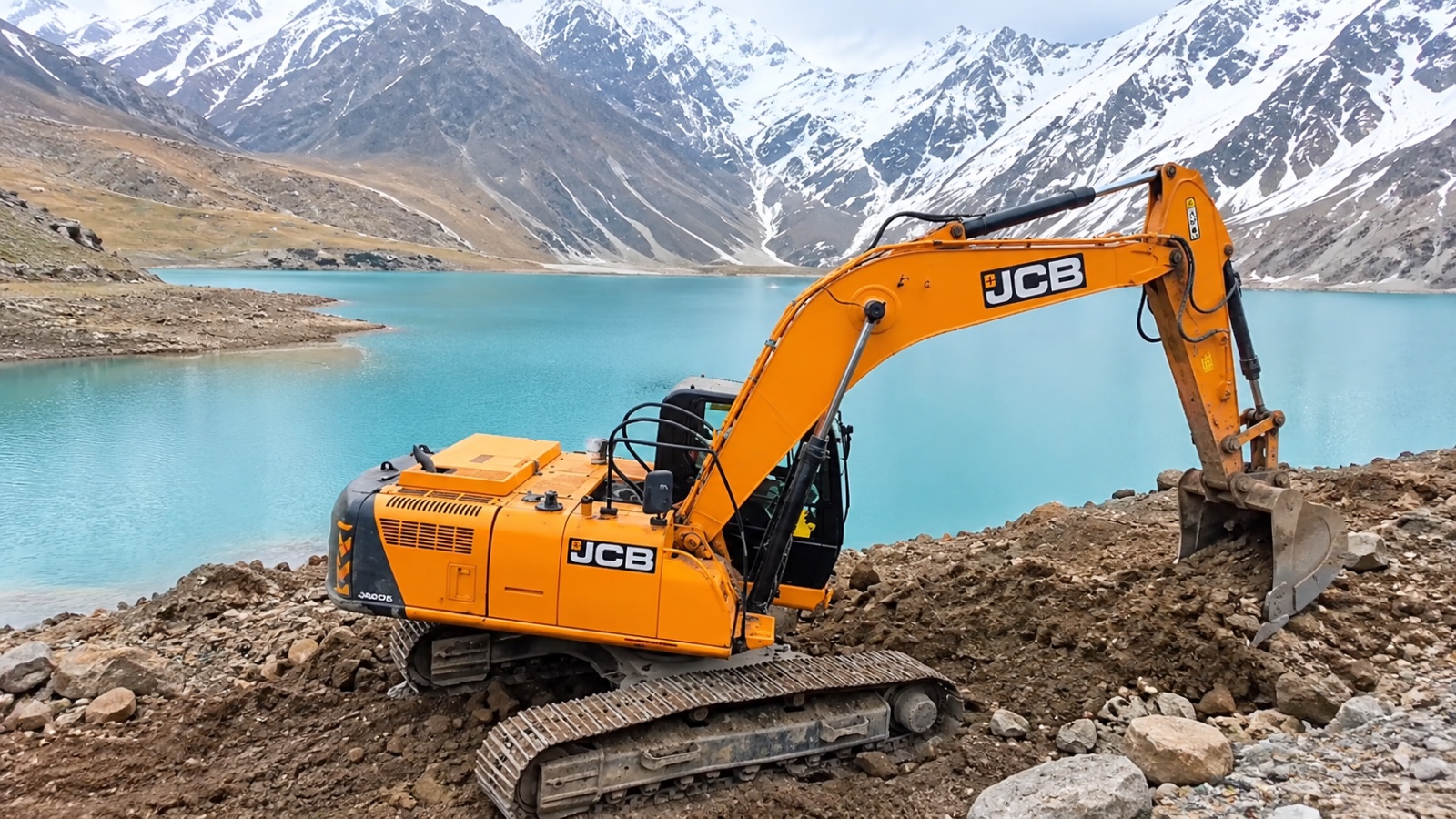

Srinagar: After the videos of heavy machinery and construction activities near the Sheshnag Lake in the glacial region of Pahalgam went viral on social media, concerns have grown over possible damage to the fragile Himalayan environment.
Satish Maldar, an activist and chairman of Jammu and Kashmir Peace Forum, opposed the reported work and demanded that it be stopped immediately.
Speaking to the Free Press Kashmir over the phone, Maldar said the work near Sheshnag Lake was part of a proposed infrastructure project involving the NH-501 Khanabal-Baltal highway corridor and a proposed tunnel of around 10.8 kilometres between Sheshnag and Panchtarni near Ganesh Top.
He mentioned the involvement of the Border Roads Organisation (BRO) and the National Highways Authority of India (NHAI), and claimed that the project had received approval in 2022.
He also referred to the preparation of the Detailed Project Report (DPR), alignment and different stages of tendering and sanctions, and offered to share further documents about the project.
Objecting to the activities, Maldar said Sheshnag was not just a water body but a place with deep religious importance for Hindus, especially Kashmiri Pandits.
He said the area also plays an important role in maintaining the ecological balance of the region.
“The Amarnath Yatra is not just a tourist destination. It is a sacred pilgrimage, and those involved in these activities should understand its religious importance,” Maldar said.
“By disturbing and carrying out excavation at this place, they are causing a disaster to mankind. They should immediately stop it,” he said.
Questioning the purpose of the construction work, Maldar said there was no clear explanation about what authorities intended to build in the area. He said even if the plan was to construct a motorable road, it could cause serious damage to the environment.
“Even if they are making a motorised road, it is going to destroy the entire ecological system up to that place,” he cautioned.
Maldar also questioned whether the proposed work was connected with a new route for the Amarnath Yatra or some other infrastructure project, and said the authorities should explain its purpose and possible environmental impact.
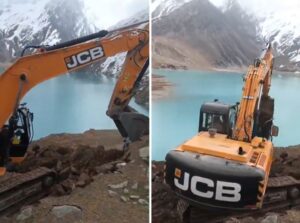
A screengrab from a video shared by PDP spokesperson Mohit Bhan on his X handle. [Video Grab: X/@buttkout]
Explaining the religious importance of Sheshnag, Maldar said Hindu religious traditions give great importance to nature and its five basic elements. He said rivers, mountains, lakes, forests and other natural formations are considered sacred and are respected and worshipped in Hindu tradition.
He said disturbing a natural place like Sheshnag through excavation and construction could also hurt the religious sentiments of Hindus. He further said Sheshnag has its own significance in Hindu mythology and traditions associated with Lord Shiva, and its religious identity and natural character should be respected.
Maldar also referred to environmental damage witnessed during previous Amarnath Yatras, saying videos and reports of environmental degradation had raised concerns about the need to protect the fragile surroundings.
Meanwhile, environmental activist Dr Raja Muzaffar has also raised questions over the movement of heavy machinery towards the glaciers of Kashmir.
In a post on X, Muzaffar described the situation as a disaster and questioned how such heavy machinery had reached the glaciers.
“This is a disaster – How such heavy machines reach our Glaciers of Kashmir?” he wrote, while tagging the Union Ministry of Environment, Forest and Climate Change, the Central Pollution Control Board, Lok Bhavan Jammu and Kashmir and Chief Minister Omar Abdullah.
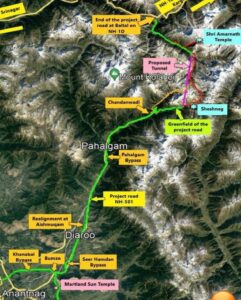
A 3D map showing the proposed road alignment between Sheshnag and Panchtarni near Ganesh Top.
The issue has also drawn objections from PDP spokesperson Mohit Bhan and Mirwaiz Umar Farooq, who have expressed concern over the reported use of heavy machinery near Sheshnag Lake.
Earlier, Mirwaiz Umar Farooq had expressed serious concern over the reported construction activities near the lake. In a post on X, he described the visuals as disturbing and warned that such work could damage the fragile mountain environment.
Pointing to the retreat of glaciers and devastating glacier-related floods in neighbouring Nepal, Mirwaiz said these developments showed how vulnerable the Himalayan region had become.
While acknowledging the need to improve facilities for Amarnath Yatra pilgrims, Mirwaiz said development should not come at the cost of environmental protection.
“Kashmir has always warmly welcomed Amarnath Yatra pilgrims, and improving facilities for them has never been an issue. But not at the cost of our fragile ecosystem,” he said.
He also called for immediate intervention, saying Kashmir’s mountains, glaciers and water bodies must be protected for future generations.
In a post on X, Bhan said Sheshnag is not merely a mountain lake but a landscape deeply associated with Hindu religious traditions.
According to traditional Hindu belief, Lord Shiva is said to have left behind the serpents at Sheshnag before proceeding towards the Amarnath Cave to narrate the Amar Katha to Goddess Parvati.
Questioning the reported construction, road cutting and surface levelling in the area, Bhan said development should not come at the expense of a landscape that holds both ecological and religious significance.
He pointed out the contradiction in invoking Hindu faith while allowing disturbances to a natural landscape considered sacred in the tradition.
“Faith and ecology are not competing interests. Both demand protection,” Bhan said.
Questioning what was being preserved in the name of the Amarnath Yatra if the sanctity of Sheshnag was not respected, Bhan called for attention to protecting the lake and its surrounding environment.
Meanwhile, CPI(M) leader Mohammad Yousuf Tarigami, in a post on X, described visuals of an excavator cutting and levelling land near the lake as deeply disturbing.
Pointing out that Sheshnag is among the 14 high-risk glacial lakes identified in Jammu and Kashmir, he warned that disturbing the fragile terrain with heavy machinery could invite disaster.
Tarigami said he was not against development but stressed that infrastructure work in the high Himalayas must be based on scientific studies and proper environmental assessments.
Citing the Kedarnath disaster of 2013, the South Lhonak Lake disaster in Sikkim in 2023 and recent glacier-related devastation in Nepal, he warned that any disaster in the area could affect Pahalgam, the Lidder river and downstream areas of south Kashmir.
He urged the authorities to stop risky work, make project details and clearances public, and arrange an inspection by glaciologists and environmental experts.