

There is more to Kashmiri literature than old verses, fading manuscripts and names remembered on anniversaries. It is, in many ways, a living record of Kashmir itself, a record of its joys and sorrows, faith and doubt, conflict and coexistence, displacement and belonging.
For readers today, especially the younger generation, returning to the works of Kashmir’s great writers is not an exercise in nostalgia. It is a way of understanding where we came from, how our society changed, and why certain questions have refused to go away.
Every society has its storytellers. Kashmir has had many, but some have risen above their times to become voices for generations. Lal Ded, Sheikh Noor-ud-Din Noorani, Mahjoor, Akhtar Mohi-ud-Din, Rehman Rahi and Hari Krishna Kaul, among others, belong to this larger literary inheritance. Their works may differ in language, style and worldview, but together they form a rich conversation about the human condition.
Lal Ded did not need elaborate institutions to make her voice heard. Her vaakhs travelled through ordinary people and survived because they spoke to something universal. Her poetry questioned dogma, exposed hypocrisy and searched for truth within the self. Centuries later, those questions have lost none of their force.
Sheikh Noor-ud-Din Noorani, or Nund Rishi, similarly occupies a special place in Kashmir’s cultural memory. His poetry brought together spirituality, compassion, simplicity and an intimate connection with the land and its people. His words became part of an oral tradition that crossed social and religious boundaries.
This is where Kashmiri literature becomes particularly important. It cannot always be neatly placed into boxes. Spirituality meets folklore; philosophy meets everyday life; love sits beside loss. The boundaries between the sacred and the ordinary often become blurred.
And perhaps that is precisely why we need to read these writers again.
Kashmir has gone through enormous changes. Political upheavals, social transformations, migration, displacement, violence and modernisation have altered the landscape in ways earlier generations could scarcely have imagined. Literature, however, has a long memory. It remembers what headlines often forget.
Modern Kashmiri writers carried this memory forward in different ways. Rehman Rahi, widely regarded as one of the towering figures of modern Kashmiri poetry, gave the language a distinctive modern voice. His work wrestled with identity, alienation, history and the uncertainties of contemporary life. Reading Rahi is not merely reading poetry; it is entering a conversation with a Kashmir that was changing rapidly around him.
Hari Krishna Kaul, too, occupies an important place in modern Kashmiri writing. His fiction explored ordinary lives caught in extraordinary circumstances. Through people, families and everyday situations, he captured the anxieties and fractures of a society experiencing profound change.
That is one of literature’s quiet powers. It puts a human face on history.
A history book may tell us that a particular period witnessed displacement. A novelist may show us a family leaving its home, a locked door, an abandoned neighbourhood and the silence that follows. Statistics can tell us the scale of a tragedy; literature can help us understand its emotional weight.
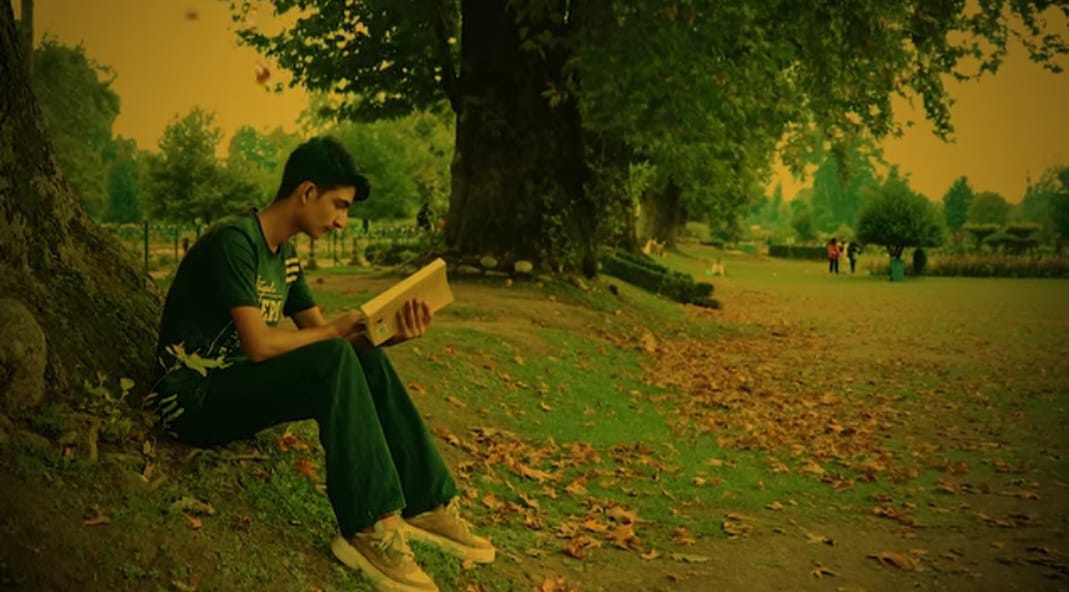
Yet there is a worrying distance between Kashmiri readers and Kashmiri literature today. Many young people can identify a writer’s name but have never read the work. Some know literary figures largely through social media posts, commemorative events or textbook excerpts. A few famous lines are circulated widely, while the larger body of work remains untouched.
We are, quite literally, losing the plot.
Part of the problem is accessibility. Much of the finest Kashmiri writing remains difficult to find, particularly for younger readers. There is a need for better translations, affordable editions, digital archives, audiobooks and contemporary introductions to classical and modern works.
But accessibility alone will not solve the problem. There must also be curiosity.
Young readers should be encouraged to ask what Lal Ded would say to the anxieties of the present day. What does Nund Rishi’s emphasis on compassion mean in an increasingly polarised society? What can Rahi tell us about identity and alienation? What do modern Kashmiri writers reveal about displacement, memory and belonging?
These are not dead questions. They are very much alive.
Reading the great writers of Kashmir does not require romanticising the past. Nor does it mean agreeing with every idea expressed in their works. Literature is not a museum piece to be admired from a distance. It is meant to be questioned, debated and interpreted anew.
Most importantly, reading across Kashmir’s literary traditions can remind us that the region has never been defined by a single voice. Its cultural landscape has always been layered and complex. Different communities, traditions and experiences have contributed to its literary imagination.
In an age of instant opinions and shrinking attention spans, serious reading may seem like a luxury. It is not. For Kashmir, it is a necessity.
The great writers are still speaking. The question is whether we are listening.
If we want to understand Kashmir beyond headlines, slogans and competing narratives, we must return to its literature. Between the lines of its poetry and within the pages of its fiction lies something no political argument can fully capture: the inner life of a people.
And that, perhaps, is reason enough to turn the page.
My sources for this opinion piece include research and publications from the University of Kashmir, Ashoka University, The Nehru Archive and Sahitya Akademi. I also referred to material on Lal Ded, Sheikh Noor-ud-Din Noorani (Nund Rishi), Rehman Rahi and Hari Krishna Kaul, including The University of Kashmir’s anthology of Rehman Rahi’s poetry.