

Court says authorities cannot escape liability merely because only part of a property was formally requisitioned if security measures deny owners access to the remaining land.
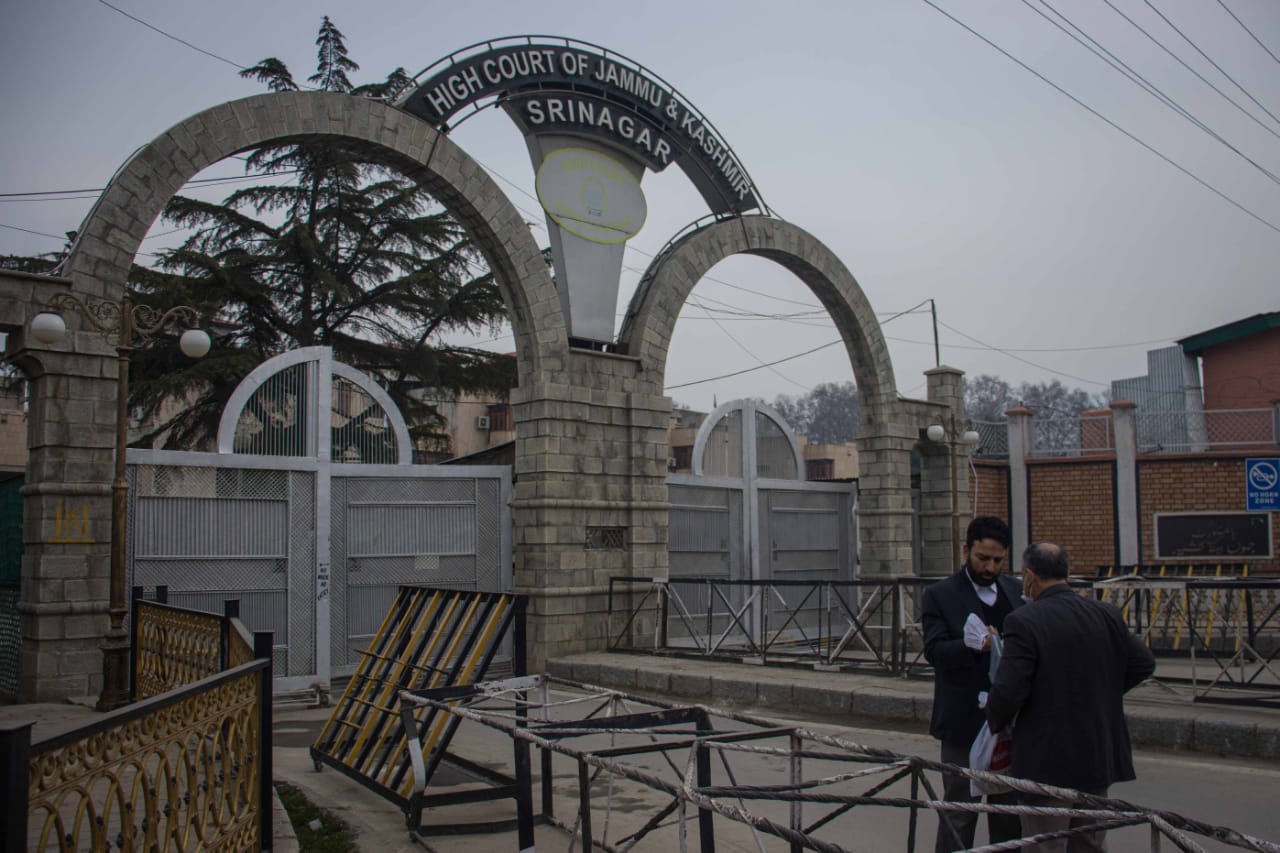
Srinagar: The High Court of Jammu & Kashmir and Ladakh has dismissed the Government of India’s appeal against a trial court decree awarding rent and compensation to landowners whose property at Jalalabad in Sopore was affected by the Army’s 22 Rashtriya Rifles (22 RR) camp, holding that authorities cannot avoid liability merely because only part of the land was formally requisitioned.
A single bench of Justice Sanjay Dhar ruled that where government action effectively deprives owners of access to and enjoyment of their remaining land through security measures, they are entitled to compensation even if that portion was never officially requisitioned.
The litigation concerns 23 kanals and 14 marlas of land at Jalalabad, Sopore. The property remained under the occupation of the Border Security Force (BSF) from 1995 before being handed over to the Central Reserve Police Force (CRPF). In March 2011, the Army’s 22 RR took over the camp.
The landowners claimed that although rent had been paid during the BSF and CRPF occupation, the Army either failed to pay rent in accordance with revised government rates or limited payments to the land formally shown as requisitioned. They argued that security measures, including concertina fencing around the camp, rendered the remaining land inaccessible.
The government of India challenged the decree passed by the Additional District Judge, Sopore, contending that only 17 kanals and 17 marlas had been requisitioned and that rent had been paid in accordance with the recommendations of the District Rent Assessment Committee. It denied occupying or restricting access to the remaining land.
After examining the evidence, the High Court found that although only part of the property had been formally requisitioned, the rest had effectively become unusable because of the Army’s security arrangements. The court noted that witnesses consistently testified that access to the remaining land had been blocked after concertina wire was laid around the camp and that these assertions remained largely unchallenged.
The court also relied on a joint inspection report produced by the appellants, observing that it acknowledged there was no approach to the non-requisitioned portion of the property, supporting the landowners’ claim that they had been deprived of its use.
Distinguishing between rent payable for requisitioned land and compensation for land rendered unusable, Justice Dhar held that the State’s liability does not end with the area formally brought under requisition.
“The appellants/defendants cannot avoid liability to pay compensation for the un-requisitioned land once it is shown that in reality, the plaintiffs’ access and enjoyment of the balance un-requisitioned portion of the suit land was completely excluded by the actions of the Army,” the court observed.
The judgment records that only 6 kanals and 6 marlas belonging to the plaintiffs had been formally requisitioned, while the remaining 17 kanals and 8 marlas became inaccessible because of the security arrangements around the Army camp. The court held that the landowners were entitled to compensation for that portion as well.
Modifying the trial court’s decree, the High Court directed that rent shall continue to be paid, at rates fixed by the District Rent Assessment Committee from time to time, for the requisitioned land measuring 6 kanals and 6 marlas. For the remaining 17 kanals and 8 marlas, it directed payment of compensation at the same rates, holding that the owners had effectively lost the use and enjoyment of the property because of the Army’s occupation and security restrictions.
Dismissing the appeal, the High Court held that authorities cannot deny compensation for private land rendered unusable through security restrictions merely because it was not formally requisitioned.