
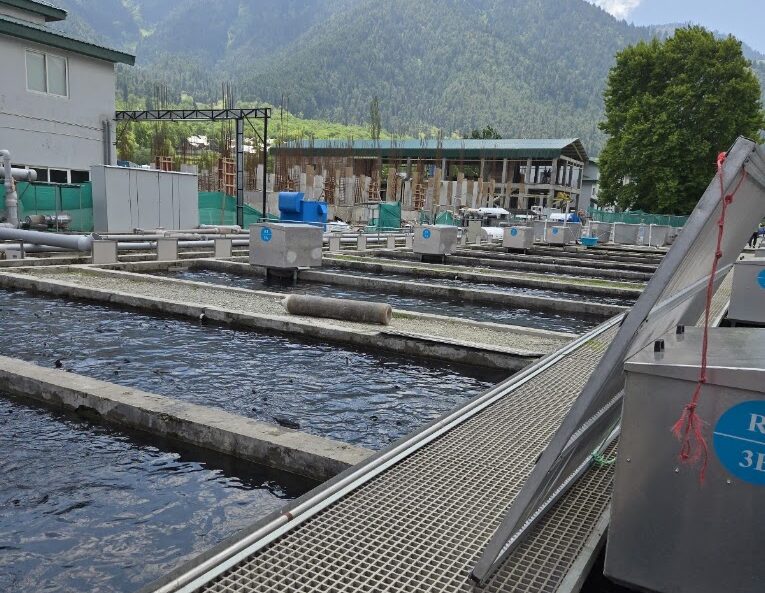

With an FSSAI licence secured for its integrated facility in Ganderbal, Khyber Aquaculture is preparing to take Kashmir-grown trout beyond traditional markets through packaged retail products, a branded store in Srinagar and an expanding farm-to-consumer supply chain.
Srinagar: In Kashmir, trout has long been associated with cold mountain streams, clear running water and the region’s distinctive food culture. Turning that regional advantage into a packaged-food business, however, requires more than suitable farming conditions. It calls for reliable processing, food-safety systems, appropriate packaging, refrigeration, distribution and products that consumers can easily prepare at home.
Khyber (K2) Aquaculture is preparing to address these challenges. The company has secured a licence from the Food Safety and Standards Authority of India (FSSAI) for its integrated aquaculture and processing facility at Chak Akhal, Kangan, in Ganderbal district. The approval marks an important step towards its planned entry into packaged consumer products and organised retail.
The company intends to introduce fresh, chilled and frozen Himalayan trout products, open its first branded retail outlet in Karan Nagar, Srinagar, and progressively expand its distribution network. It is also preparing product formats for hotels, restaurants and catering businesses, commonly grouped under the HoReCa segment.
The ambition is to move beyond conventional fish sales and build a structured business around how trout is processed, packaged, purchased and prepared.
Trout occupies a distinctive position in Kashmir’s food landscape. The region has supported trout farming for decades, and the fish is a recognised premium offering in local hospitality and dining. Yet making it a regular purchase for households and professional kitchens requires addressing a practical barrier: preparation.
Whole fish can require cleaning, cutting and careful handling. Packaged portions and fillets offer a more convenient alternative, particularly for consumers unfamiliar with trout or those looking for a straightforward meal.
Khyber’s proposed range includes boneless, skin-on portion cuts, Supreme Fillets and trout steaks. The portion cuts are intended for substantial family meals, while fillets offer a convenient ready-to-cook format. Steaks provide another option for everyday cooking.
The company plans to expand the range with curry cuts and products for more specialised culinary applications, including sushi and sashimi.
These formats serve different purchasing occasions, from household meals and traditional preparations to restaurant menus and specialised food-service requirements. For professional kitchens, standardised cuts can also help with portion planning, preparation time and consistency.
The commercial opportunity lies in making trout easier to purchase and prepare without losing the qualities that distinguish it as a regional product.
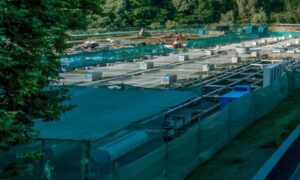
At the centre of Khyber’s expansion plans is its facility at Akhal, Kangan, which brings together hatchery, fish farming, processing and packaging operations.
The company says its current annual production capacity is 1,200 metric tonnes, with plans to increase it to 7,000 metric tonnes. Its processing facility has a stated daily capacity of up to 10 tonnes.
These figures describe different stages of the operation. Annual production capacity relates to fish production, while daily processing capacity indicates the infrastructure available to handle fish for preparation and packaging. Actual output will depend on production levels, facility utilisation, processing requirements and market demand.
The integrated model connects the supply of young fish with farming, processing and distribution. Bringing these activities together can improve coordination across the value chain and support greater control over handling and traceability, provided appropriate monitoring systems are maintained.
Khyber also uses Recirculating Aquaculture System (RAS) technology as part of its production infrastructure.
Unlike conventional flow-through systems, RAS facilities recirculate and treat water for reuse. Depending on their design, they can incorporate mechanical and biological filtration, oxygenation and other water-quality controls. These systems can help operators manage farming conditions more closely, although their performance depends on engineering, energy reliability, water management and skilled operation.
For trout, maintaining suitable temperatures, dissolved oxygen levels and water quality is essential. These requirements become particularly important when production is intended to support a regular packaged-product business.
The facility provides a platform for expansion, but translating installed capacity into sustained commercial output will depend on operational efficiency, product quality and the development of reliable sales channels.
The FSSAI licence is an important regulatory milestone in Khyber’s transition from farm production towards branded packaged food.
According to the company, its licence covers the manufacture, trade and retail of fish and fish products. The activities undertaken must remain within the scope of the authorisation and comply with applicable food-safety requirements.
A food licence should not be confused with an independent endorsement of every product claim or a guarantee of a particular shelf life. Continued compliance depends on hygiene, handling, storage, processing and other applicable requirements.
For packaged seafood, safety extends beyond the processing facility. Fish must be handled hygienically, protected against contamination and maintained at appropriate temperatures during storage and transportation. Packaging integrity, accurate labelling, traceability and stock rotation are also important.
The cold chain is especially critical. Chilled and frozen fish require different temperature-management regimes, and interruptions can compromise product quality and safety.
For Khyber, the challenge will be to maintain these controls consistently as its product range, volumes and geographical reach increase.
One technology the company plans to use is Modified Atmosphere Packaging (MAP), which involves adjusting the atmosphere inside a sealed package using a controlled gas mixture.
Khyber says it intends to use carbon dioxide and nitrogen to help preserve the freshness of its trout products. When appropriately designed and combined with hygienic processing and suitable storage conditions, MAP can slow certain forms of spoilage. Its effectiveness depends on factors including the fish’s initial quality, the gas mixture, package integrity and temperature control.
MAP does not make fish shelf-stable or eliminate the need for refrigeration.
The company expects its chilled products to have a shelf life of five to eight days and its frozen products a shelf life of up to 12 months, subject to prescribed storage and handling conditions. These are company-stated targets for the planned range. Each product’s applicable shelf life must be supported by appropriate validation and reflected in its labelling.
Clearly stated storage periods can help households plan meals and allow retailers to manage inventory more effectively. For distributors serving markets beyond Kashmir, they are also important for planning transportation, stock rotation and replenishment.
The commercial value of packaging will ultimately depend on whether products reach customers in suitable condition and remain safe throughout their stated shelf life.
Khyber’s next visible step towards consumers is its planned first branded retail outlet in Karan Nagar, Srinagar.
According to the company, the store is intended to offer live, fresh, chilled and frozen trout. Customers will also be able to select live fish and have it cleaned, cut and packed at the outlet.
The approach combines the familiarity of selecting a whole fish with the convenience of prepared portions. It could appeal both to customers who prefer traditional fish purchasing and to those seeking ready-to-cook products.
The store will also provide an opportunity for the company to understand consumer preferences, introduce its product range and build recognition for its brand.
Its success will depend on more than the availability of different cuts. Pricing, product familiarity, customer service, storage practices and repeat purchases will all influence whether the outlet can establish a sustainable retail business.
Khyber is also preparing larger packs for the HoReCa segment, whose buyers often require consistent specifications, predictable quantities and dependable replenishment.
One planned offering is a 3.2-kilogram pack of Supreme Fillets containing four pieces, designed for professional kitchens and bulk requirements.
Standardised cuts can simplify portion planning and kitchen operations, particularly for establishments that serve trout regularly. Larger packs may also help food-service buyers manage purchasing across multiple meals or service periods.
The opportunity extends beyond high-end dining. If pricing, availability and logistics align with the requirements of different buyers, trout could find applications across a wider range of restaurant menus and institutional kitchens.
However, professional buyers evaluate products on commercial considerations as well as quality. Delivered cost per portion, preparation yield, consistency between deliveries, storage requirements and the reliability of replenishment can determine whether a supplier secures repeat business.
Khyber’s processing capacity could help it meet larger orders, but sustained demand will depend on its ability to supply the right product at a commercially viable price.
Khyber’s plans come amid a broader opportunity for cold-water aquaculture across the Himalayan region. Suitable environments for trout and other cold-water fish exist across Jammu and Kashmir, Ladakh, Himachal Pradesh, Uttarakhand, Sikkim and parts of north-eastern India, although farming potential varies with local water quality, temperature and infrastructure.
Official fisheries figures published by the Government of India indicate that Jammu and Kashmir produced approximately 3,010 metric tonnes of trout in 2024–25, while national trout production was reported at approximately 6,000 metric tonnes during the same period. These figures place the Union Territory among India’s leading trout-producing regions. The underlying official statistics should be cited in the published version.
The figures also highlight the distinction between producing fish and developing a market for finished products. Processing, packaging, transportation, retail access and consumer awareness determine how much value can be generated beyond the farm gate.
More organised value chains could create opportunities for processing workers, logistics providers, retailers and businesses connected to aquaculture. Depending on sourcing arrangements, they could also provide farmers with additional routes to market.
These benefits are not automatic. The development of large integrated operators must be considered alongside the role of smaller fish farmers, local suppliers and existing markets. Procurement practices, pricing, access to infrastructure and the distribution of economic benefits will influence how the sector evolves.
For Kashmir, the longer-term opportunity lies not simply in increasing trout production, but in building a more reliable market for the fish.
Khyber describes its approach as technology-led aquaculture, with an emphasis on scientific farming and biosecurity. Its planned expansion also raises questions about the environmental demands of increasing production.
RAS technology can reduce water withdrawal compared with some conventional systems by recirculating and treating water. It can also allow closer control of farming conditions. However, the environmental performance of an individual facility depends on energy consumption, water sourcing, treatment processes, waste management, feed practices and other operational factors.
Biosecurity is equally important. Measures to prevent the introduction and spread of pathogens help protect fish health and production continuity, but they require consistent protocols, monitoring and trained personnel.
As Khyber moves towards its stated goal of increasing annual capacity from 1,200 to 7,000 metric tonnes, resource use, energy efficiency, waste handling, fish welfare and input sourcing will become increasingly relevant to assessing its overall sustainability.
The company says it is working towards Best Aquaculture Practices (BAP) certification, an internationally recognised aquaculture certification programme. If achieved for the relevant facilities and scope, certification could help support access to markets where buyers require documented standards for responsible production and supply-chain management.
BAP certification remains a stated future objective, not an achievement already secured. Demonstrating environmental and operational performance through verifiable standards could become an important part of Khyber’s commercial proposition as it pursues new markets.
With its FSSAI licence in place, Khyber plans to expand through distributors, modern retail, HoReCa customers and direct-to-consumer e-commerce channels. The company has identified Jammu and Kashmir, Delhi-NCR and other North Indian markets as potential areas for expansion.
The pace and geographical sequence of this rollout will depend on the company’s ability to coordinate supply with demand.
Fresh and chilled products require rapid movement and dependable refrigeration, while frozen products can offer greater flexibility in storage and distribution, provided the required temperatures are maintained. Each new market will also bring questions of transport costs, retail access, pricing, packaging sizes and consumer familiarity.
Expansion will require the company to build distribution relationships while maintaining consistent product availability. Producing at scale without sufficiently developed sales channels can put pressure on inventory and margins, while unreliable supply can undermine customer confidence.
Khyber says its immediate priorities are the launch of packaged trout products, the opening of its Srinagar retail store and the development of the cold-chain and distribution infrastructure needed to serve a larger market. Longer-term plans include increasing production capacity and pursuing certification to support its wider ambitions.
For Khyber Aquaculture, the FSSAI licence marks an important step towards turning its integrated trout-farming and processing operations in Ganderbal into a branded retail business. The planned Srinagar outlet and packaged product range will test whether convenient formats can attract new consumers while meeting the requirements of restaurants and other institutional buyers.
The company’s next challenge is to translate production capacity into dependable supply, competitive pricing and repeat demand. Its expansion will also depend on validated shelf-life claims, effective cold-chain management and the ability to maintain quality as distribution grows.
Kashmir’s established association with trout gives Khyber a distinctive starting point. Building a lasting business from that advantage will require more than increased production: it will depend on connecting farms in Ganderbal with consumers and professional kitchens through a reliable, commercially viable supply chain.