

Having worked for years in healthcare and hospital safety, I know that trust is the foundation on which medicine and food systems stand. Once that trust is broken, rebuilding it becomes an uphill battle.
The recent rotten-meat exposé in Kashmir has created precisely this rupture. What worries me most is not the noise of announcements and committees but the silence around the two simplest questions that every ordinary Kashmiri is asking.
Until those questions are answered clearly, fear will continue to grow in homes, kitchens, and markets across the valley.
The official line is that people must wait until the results are finalised.
As though public health and spiritual faith can be paused until Sunday arrives. But delay only deepens suspicion.
In safety science, we often say that uncertainty is more dangerous than a known risk. Kashmir today is living through that dangerous uncertainty.
The first question is painfully simple: what meat was it?
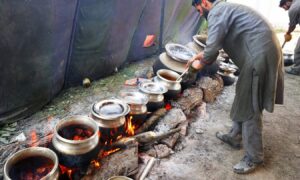
For generations, Kashmiris have trusted mutton to be at the heart of their food and culture. It is not merely protein on a plate. It is the centrepiece of wazwan, a symbol of identity, a thread woven through family traditions and collective memory.
The exposé has introduced a darker doubt. Was the meat that flooded the markets and found its way into restaurants truly mutton?
Or was it something else, something hidden from the consumer? This should not be a puzzle to untangle.
Documentation of origin, purchase records, and supply chain invoices are legal requirements.
They exist for this very reason: to protect the public and to guarantee transparency.
Yet instead of clarity, what we have heard so far are vague promises and technical delays. Not one hard fact has been placed before the people who are most affected. That silence corrodes trust faster than contamination itself.
The second question cuts even deeper. Was the meat halal or haram?
This is not simply a matter of diet or personal preference. For a Muslim majority society, this goes to the core of faith and conscience.
Science can examine meat for disease, bacteria, or chemical residues. But science cannot tell us whether the animal was sacrificed in the name of Allah or whether the act of slaughter followed the principles that make meat lawful.
If those conditions are absent, an animal that is halal in species becomes haram in practice.
That uncertainty is a heavy burden for a people whose lives are shaped by both health and faith.
The lack of traceability has made every Kashmiri ask whether what was eaten yesterday and what may be eaten tomorrow truly meets the standards of their belief.
The way forward cannot lie in closed-door meetings or carefully worded press notes.
What is needed is complete transparency from the authorities who regulate food and safeguard public health. The Food Safety and Vigilance teams, the municipal authorities, the health directorates, and the experts in preventive medicine must speak openly to the public.
They must explain where the system failed, what exactly was seized, and who was responsible for letting this breach occur.
Anything less will not restore confidence. It will only confirm the suspicion that the truth is being hidden.
Religious leadership, too, cannot remain on the sidelines.
People look to clerics and scholars for moral guidance, especially in times of uncertainty. The expose is not only a health failure but also a spiritual crisis.
Silence from those who guide the community will only leave people more adrift.
What makes this episode so damaging is that it has struck simultaneously at two pillars of ordinary life. If the meat was unhygienic, then health has been endangered.
If it were not halal, then faith has been compromised. The common Kashmiri is left wrestling with a dilemma no citizen should have to face: not knowing what has entered the body, and not knowing if conscience has been violated in the process.
Rules will eventually be written, and new guidelines will be announced. But none of that will matter until two questions are answered with honesty and proof.
What meat was it? Was it halal or haram? Unless clarity replaces silence, people will carry doubt into every meal, and confidence in the system will continue to collapse.
In public health, just as in faith, the truth cannot wait. It must be spoken plainly, and it must be spoken now.